Driving Digital Resilience: How Geofinity Is Powering Nepal’s Digital Transformation?
Digital technology is no longer simply a tool for improving business efficiency. It has become a foundation for how organizations operate, communicate, deliver services, manage information, and respond to change.
Modern enterprise software in Nepal is increasingly moving beyond isolated applications toward connected ERP, cloud, AI, data and digital transformation platforms.
For businesses and institutions in Nepal, this transformation is creating both opportunities and new challenges.
Organizations are increasingly moving from paper-based processes and disconnected systems toward ERP platforms, cloud applications, artificial intelligence, centralized data systems, digital services, and integrated business platforms.
But digital transformation is not only about adopting new technology.
It is also about becoming digitally resilient.
Digital resilience means having the technology, infrastructure, data, processes, and people required to continue operating, adapt to disruption, recover from incidents, and evolve as technology changes.
This is becoming particularly important as Nepal accelerates its digital transformation journey.
In February 2026, the World Bank approved $50 million for Nepal's Digital Transformation Project, supporting digital public infrastructure, government-wide data exchange, digital services, cybersecurity, electronic signatures, and data governance. The project is designed to improve digital services for citizens and businesses while strengthening the country's digital foundations.
Against this backdrop, technology companies have an increasingly important role to play.
One of the Nepali companies working in this space is Geofinity Solutions Pvt. Ltd., which provides ERP, AI, custom software, cloud, data, and digital transformation solutions for organizations across different sectors.
What Is Digital Resilience?
Digital resilience is an organization's ability to continue functioning, adapt, recover, and grow in an increasingly technology-dependent environment.
It goes beyond cybersecurity.
A digitally resilient organization considers several interconnected areas:
• Reliable digital infrastructure
• Cybersecurity
• Data protection
• Backup and recovery
• Cloud infrastructure
• System integration
• Business continuity
• Scalable software
• Data governance
• Employee digital capabilities
• Technology modernization
• Disaster recovery
For example, imagine a company whose entire operation depends on a single outdated application.
If that system fails, the organization may lose access to:
• Customer information
• Financial records
• Inventory
• Employee information
• Sales data
• Operational reports
Digital resilience means designing systems so that a technology failure does not immediately become a business failure.
Why Digital Resilience Matters in Nepal?
Nepal's digital ecosystem is expanding rapidly.
Businesses are increasingly using:
• Online payment systems
• Cloud platforms
• ERP software
• Digital marketing
• E-commerce
• Mobile applications
• Digital communication
• Data analytics
• AI tools
• Online government services
At the same time, the risks associated with digital dependence are increasing.
Cybersecurity incidents, infrastructure failures, data loss, outdated systems, weak integrations, and poor data management can disrupt organizations that are heavily dependent on technology.
The World Bank's assessment of Nepal's Digital Transformation Project specifically highlights the importance of secure data infrastructure, disaster recovery, data governance, cybersecurity, and interoperability as part of Nepal's digital development.
This makes digital resilience an important consideration for both the public and private sectors.
Geofinity Solutions: Supporting Nepal's Digital Transformation
Geofinity Solutions positions itself as a technology partner focused on helping organizations modernize their systems and operations.
According to its current company profile, Geofinity provides services across enterprise resource planning, AI solutions, web and cloud services, content management, digital marketing, and mobile application development. Its current product portfolio includes OptERP solutions for areas such as hospitals, fertility clinics, manufacturing, education, and SMEs.
The company's approach goes beyond developing isolated software applications.
The objective is to help organizations build connected systems that can support:
Efficiency → Integration → Data → Intelligence → Growth
Bridging Business Needs and Digital Innovation
Technology only creates value when it addresses a real organizational problem.
A business may need to reduce manual accounting.
A hospital may need better coordination between departments.
A manufacturer may need better inventory visibility.
A school may need centralized student and administrative information.
A government institution may need a secure information system.
These are different problems, but they have something in common:
They require technology designed around actual workflows.
This is where customized digital systems and sector-specific enterprise platforms can provide value.
Instead of forcing every organization into the same software model, digital transformation can be designed around:
• Industry requirements
• Organizational workflows
• Existing infrastructure
• Data requirements
• Compliance needs
• User roles
• Growth plans
• Integration requirements
1. Enterprise Resource Planning: Building Stronger Business Foundations
Enterprise Resource Planning, or ERP, is one of the most important components of digital business transformation.
An ERP system can connect different organizational functions within a centralized platform.
These may include:
• Finance and accounting
• Human resources
• Inventory
• Procurement
• Sales
• Customer relationship management
• Manufacturing
• Reporting
• Analytics
• Billing
• Operations
Instead of maintaining disconnected systems, an organization can create a more integrated flow of information.
From disconnected systems:
Sales → Spreadsheet
Inventory → Separate software
Accounting → Another system
HR → Paper records
Management → Manual reports
Toward an integrated environment:
Sales → ERP → Inventory → Finance → Analytics
This can improve information visibility and reduce unnecessary duplication of work.
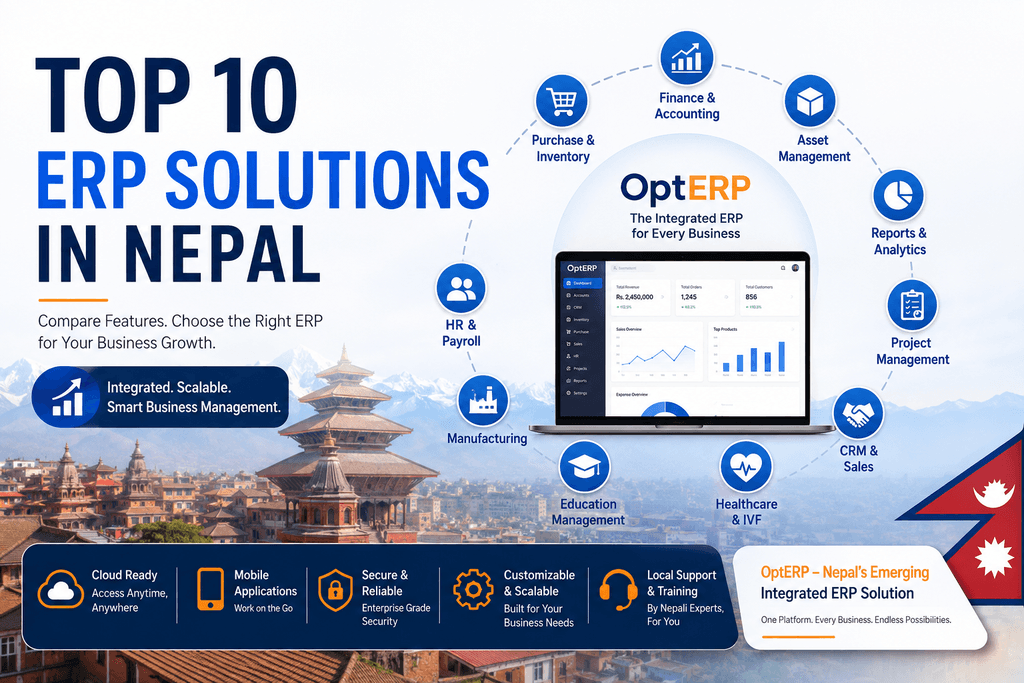
Geofinity's current product ecosystem includes OptERP solutions for healthcare, fertility clinics, manufacturing, education, and SMEs, alongside broader ERP capabilities.
Get more knowledge on: ERP Solutions in Nepal
2. AI-Powered Digital Intelligence
Artificial Intelligence is becoming another important layer of digital transformation.
Organizations generate large amounts of information every day.
The challenge is not simply collecting data.
The challenge is turning that data into useful information and decisions.
AI can support areas such as:
• Predictive analytics
• Automated reporting
• Pattern recognition
• Forecasting
• Intelligent search
• Document processing
• Workflow automation
• Recommendation systems
• Decision-support tools
• Generative AI applications
For example, a business may use historical sales data to identify purchasing patterns.
A hospital may use AI-assisted tools to organize large amounts of information.
A manufacturer may use analytics to understand production and inventory trends.
The value comes from connecting AI to reliable organizational data and clearly defined business processes.
Geofinity currently identifies AI solutions, including machine learning and generative AI, as part of its technology services.
3. Custom Software Development
Not every organization can solve its technology requirements with an off-the-shelf product.
Organizations often have workflows that are:
• Industry-specific
• Institution-specific
• Legally constrained
• Operationally complex
• Difficult to replicate using generic software
Custom software can address these requirements.
Geofinity's current service portfolio includes web and cloud services and mobile application development, alongside custom technology solutions.
Custom platforms can be developed for areas such as:
• CRM
• HRM
• Inventory
• Billing
• Healthcare
• Education
• Manufacturing
• Government services
• Customer portals
• Mobile applications
• Management information systems
The goal should not be to build custom software simply because it is possible.
The objective should be to build it when customization provides meaningful business or operational value.
4. Cloud and Scalable Digital Infrastructure
As organizations grow, their technology infrastructure needs to grow with them.
Cloud technology can provide organizations with flexible infrastructure for applications, data, backups, development environments, and business services.
Potential benefits include:
• Scalability
• Remote accessibility
• Centralized management
• Faster deployment
• Flexible infrastructure
• Disaster recovery options
• Reduced dependence on local hardware
However, cloud adoption should not be viewed as automatically secure or resilient.
Organizations still need to consider:
• Access controls
• Backup policies
• Encryption
• Monitoring
• Disaster recovery
• Vendor dependency
• Data governance
• Business continuity
The strongest approach combines cloud scalability with appropriate security and governance.
5. Centralized Data and Information Systems
Data is one of the most valuable assets of a modern organization.
However, data becomes difficult to use when it is scattered across multiple systems.
For example:
Department A → Excel
Department B → Local database
Department C → Paper records
Department D → Separate application
Management then faces a simple but important problem:
Which data should we trust?
Centralized information systems can help organizations create more consistent access to information.
They can support:
• Data consolidation
• System integration
• Reporting
• Data visualization
• Data migration
• Analytics
• Historical data management
• Decision-making
A well-designed data architecture can also create a stronger foundation for future AI applications.
6. Digital Transformation in the Public Sector
Digital resilience is not limited to private businesses.
Government institutions increasingly depend on digital systems for:
• Citizen services
• Identity management
• Public records
• Financial systems
• Healthcare
• Education
• Communication
• Administrative services
Nepal's Digital Transformation Project demonstrates the increasing importance of secure and integrated digital infrastructure at the national level.
The project includes an integrated citizen service portal, government-wide data exchange, digital locker infrastructure, digital signatures, cybersecurity, and data governance.
This represents an important shift:
Digital government is moving from isolated online services toward interconnected digital infrastructure.
For such systems, resilience becomes essential.
A digital service that is unavailable when citizens need it cannot deliver its intended value.
Digital Resilience and Cybersecurity
Digital transformation increases opportunities, but it also increases exposure to digital risks.
The World Bank's 2026 assessment of Nepal's digital transformation notes cybersecurity capacity as an important challenge and identifies the need for stronger institutional and technical capabilities.
Cybersecurity therefore needs to be treated as part of digital transformation—not as something added after a system has already been developed.
Organizations should consider:
✔ Identity and Access Management
Users should receive only the access required for their responsibilities.
✔ Data Protection
Sensitive information should be appropriately protected during storage and transmission.
✔ Backup
Important data should have reliable backup strategies.
✔ Disaster Recovery
Organizations should know how systems will be restored following major incidents.
✔ Monitoring
Suspicious activity and system problems should be detected as early as possible.
✔ Security Updates
Software and infrastructure should be maintained to address known vulnerabilities.
✔ Incident Response
Organizations should have defined procedures for responding to cyber incidents.
This is the foundation of digital resilience.
Why Integration Matters?
One of the biggest weaknesses in digital transformation is creating isolated systems.
Imagine a business using:
• One system for sales
• Another for inventory
• Another for accounting
• Another for HR
• Another for CRM
If these systems do not communicate, employees may have to repeatedly enter the same information.
Integration can create a more connected workflow.
For example:
Customer Order
↓
Sales System
↓
Inventory Update
↓
Accounting Entry
↓
Management Dashboard
This reduces unnecessary duplication and can provide management with more timely information.
Digital Resilience Is More Than Technology
A common misconception is that buying modern software automatically creates a digitally resilient organization.
It does not.
Technology is only one component.
A resilient organization also needs:
| Area | Why It Matters |
| Technology | Provides the digital foundation |
| People | Employees operate and manage systems |
| Processes | Define how work is performed |
| Data | Supports operations and decisions |
| Security | Protects systems and information |
| Governance | Establishes accountability and controls |
| Backup | Protects against data loss |
| Recovery | Enables restoration after disruption |
| Training | Helps employees use systems correctly |
| Monitoring | Identifies problems early |
Digital resilience is therefore an organizational capability, not merely a software feature.
Geofinity's Core Digital Capabilities
Geofinity's current service portfolio spans multiple areas of digital transformation.
| Capability | Potential Business Value |
| ERP | Integrated business operations |
| AI Solutions | Intelligent automation and analytics |
| Web & Cloud Services | Scalable digital infrastructure |
| Custom Software | Solutions tailored to specific workflows |
| Mobile Applications | Mobile-first digital experiences |
| Data Management | Better information accessibility |
| Content Management | Structured digital content |
| Digital Marketing | Data-driven customer engagement |
This combination allows digital transformation to be approached as an ecosystem rather than as a single application.
Sector-Specific Digital Transformation
Different industries require different digital strategies.
✦ Healthcare
Digital systems can connect administrative, financial, clinical-support, inventory, and reporting workflows.
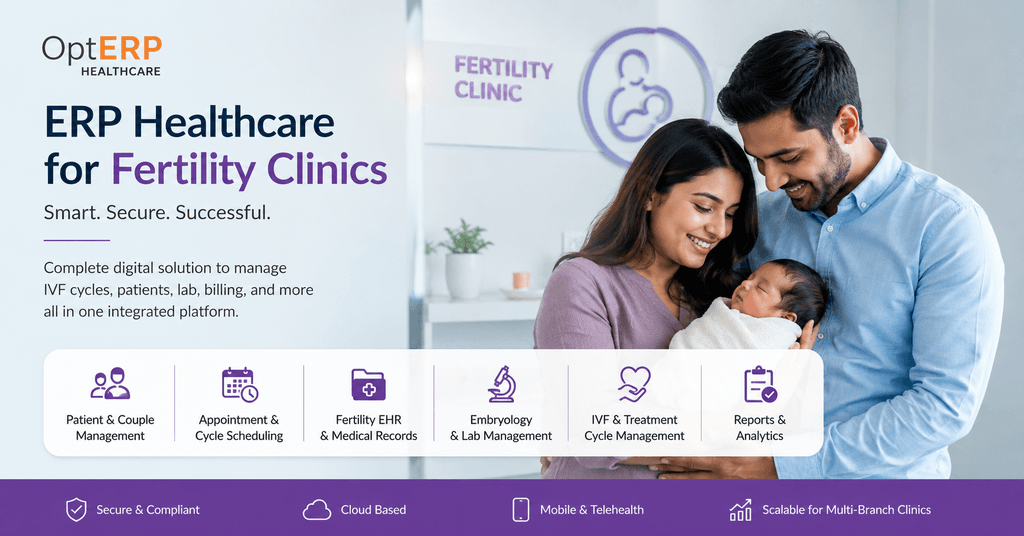
Geofinity currently offers OptERP Hospital and OptERP Fertility Clinic solutions as part of its product portfolio.
Get more knowledge on: Healthcare ERP in Nepal
✦ Manufacturing
Manufacturers can benefit from integrated inventory, production, procurement, sales, and financial information.
Geofinity's current portfolio includes OptERP Manufacturing.
✦ Education
Educational institutions can use digital platforms to centralize administrative information, student-related processes, finance, and reporting.
Geofinity currently lists OptERP Education among its products.
✦ SMEs
Small and medium-sized businesses need systems that are practical, scalable, and appropriate for their operational size.
Geofinity also lists OptERP SME as part of its current product ecosystem.
From Digital Transformation to Digital Resilience
Digital transformation asks:
How can technology improve the way we work?
Digital resilience asks a broader question:
How can technology help us continue, adapt, and recover when circumstances change?
These concepts are closely connected.
A modern organization should therefore consider transformation through several stages:
Digitize
Convert manual processes into digital workflows.
↓
Integrate
Connect systems and departments.
↓
Analyze
Turn operational data into useful insights.
↓
Automate
Reduce repetitive manual work.
↓
Secure
Protect systems and information.
↓
Resilience
Prepare for disruption and recovery.
↓
Innovate
Use emerging technologies to create new opportunities.
This is a more sustainable approach to digital transformation.
The Importance of Future-Ready Architecture
Technology changes quickly.
A system developed today may need to integrate with completely different technologies several years later.
That is why organizations should consider architectural flexibility when investing in digital systems.
Future-ready systems should ideally consider:
• APIs
• Modular architecture
• Interoperability
• Cloud readiness
• Data portability
• Security
• Scalability
• Integration
• Upgradeability
• Open standards
Open-source technologies can also provide organizations with flexibility where appropriate, particularly when avoiding unnecessary vendor lock-in is an important consideration.
The objective is not to predict every future technology.
It is to build systems capable of adapting to change.
Digital Resilience and AI Readiness
There is another reason organizations should care about strong digital foundations.
AI depends on data.
If organizational data is:
• fragmented,
• inaccurate,
• inaccessible,
• poorly structured,
• duplicated,
• or insecure,
then AI initiatives can become difficult to scale.
A stronger foundation looks like:
Reliable Data
↓
Integrated Systems
↓
Secure Infrastructure
↓
Analytics
↓
AI Applications
This means today's investment in ERP, data management, integration, and cloud infrastructure can influence an organization's ability to adopt AI tomorrow.
Building a Digitally Resilient Organization
Organizations looking to strengthen digital resilience can begin by asking several practical questions:
1. Where are our critical business processes?
Identify processes that would seriously affect operations if they stopped.
2. Where is our data stored?
Understand which systems, databases, spreadsheets, and physical records contain critical information.
3. Which systems are interconnected?
Identify integrations and areas where employees manually transfer information between systems.
4. What happens if a critical system fails?
Develop backup and recovery procedures.
5. Who can access sensitive information?
Review user roles and permissions.
6. Are our systems scalable?
Consider whether existing infrastructure can support future growth.
7. Can our systems integrate with new technologies?
Evaluate APIs, interoperability, and modularity.
8. Are employees trained?
Technology cannot deliver its full value if users do not understand how to use it.
Geofinity's Role in Nepal's Digital Future
Geofinity's current positioning is centered around helping organizations modernize operations through integrated technology solutions. Its stated mission is to empower businesses through innovative, reliable, and scalable IT solutions that support digital transformation and growth.
Its current ecosystem spans ERP products, AI solutions, web and cloud services, mobile development, content management, and digital marketing.
This broad technology portfolio reflects an important reality:
Digital transformation rarely happens through one technology alone.
An organization may need an ERP system today, cloud infrastructure tomorrow, data integration next year, and AI capabilities as its information architecture matures.
A technology partner capable of supporting multiple stages of that journey can therefore become valuable beyond the initial software implementation.
Looking Ahead: Nepal's Digital Transformation Journey
Nepal's digital future is likely to involve increasing dependence on connected infrastructure, digital services, data, AI, cloud technologies, and secure information systems.
The country's Digital Transformation Project is already placing emphasis on digital public infrastructure, secure data exchange, digital services, cybersecurity, and data governance.
At the same time, businesses across Nepal are increasingly adopting digital tools to improve operations and compete in a more connected market.
This creates an opportunity for Nepal's technology ecosystem.
Local technology companies can contribute by developing solutions that understand:
• Nepali business environments
• Local operational requirements
• Industry-specific workflows
• Public-sector requirements
• Local infrastructure realities
• Emerging technology opportunities
Digital resilience will increasingly depend on the ability to combine these local requirements with globally relevant technology practices.
Conclusion
Digital transformation is no longer simply about moving from paper to software. It is about building organizations that can operate, adapt, recover, and innovate in a digital environment.
For Nepal, this transformation is becoming increasingly important as businesses, government institutions, and other organizations rely more heavily on digital infrastructure.
ERP can create integrated business operations.
AI can turn data into intelligence.
Cloud infrastructure can provide scalability.
Custom software can address unique workflows.
Data platforms can create a foundation for analytics.
Cybersecurity and disaster recovery can protect critical systems.
Together, these technologies can contribute to something larger:
Digital resilience.
Geofinity Solutions is positioning itself within this evolving ecosystem by providing ERP, AI, cloud, custom software, mobile, data, and other digital solutions for organizations across Nepal and beyond.
As Nepal continues its digital transformation journey, the organizations that succeed will not simply be those that adopt the newest technologies.
They will be the ones that build secure, integrated, scalable, adaptable, and resilient digital foundations.
And that is where digital transformation becomes more than technology—it becomes a strategy for long-term organizational growth.
Frequently Asked Questions (FAQ's):
Q. What is digital resilience?
Digital resilience is an organization's ability to continue operating, adapt to change, recover from disruptions, and maintain critical digital services while managing technology-related risks.
Q. Why is digital resilience important for Nepal?
As businesses and public institutions become increasingly dependent on digital systems, disruptions involving cybersecurity, infrastructure, data, or software can have a larger operational impact. Building resilient systems helps organizations prepare for these risks.
Q. What is the difference between digital transformation and digital resilience?
Digital transformation focuses on using technology to improve or redesign processes and services. Digital resilience focuses on ensuring those digital systems can remain secure, adaptable, available, and recoverable when disruptions occur.
Q. How does ERP contribute to digital resilience?
ERP can centralize and integrate important business processes such as finance, inventory, procurement, sales, HR, and reporting. This can reduce dependence on disconnected manual processes and provide organizations with more structured access to operational information.
Q. How can AI support digital transformation?
AI can support automation, forecasting, analytics, document processing, decision support, recommendations, and other intelligent applications. Its effectiveness depends heavily on the quality and accessibility of an organization's underlying data.
Q. Is cloud computing important for digital resilience?
Cloud infrastructure can support scalability, remote access, centralized management, backup, and recovery strategies. However, organizations still need appropriate security, governance, backup, and disaster-recovery practices.
Q. Why is cybersecurity important for digital transformation?
As organizations become more dependent on digital systems, cyber incidents can disrupt operations and compromise information. Cybersecurity should therefore be incorporated into system design and digital transformation strategies from the beginning.
Q. What industries can benefit from digital transformation?
Almost every industry can benefit, including healthcare, manufacturing, education, retail, financial services, hospitality, logistics, government, NGOs, and professional services. The specific technology requirements depend on the organization's workflows and objectives.
Q. What does Geofinity Solutions offer?
Geofinity's current portfolio includes ERP solutions, AI solutions, web and cloud services, mobile application development, content management, and digital marketing. Its OptERP portfolio includes solutions for healthcare, fertility clinics, manufacturing, education, and SMEs.
Q. How can a business start its digital transformation journey?
Businesses should begin by identifying their most important operational challenges, mapping existing processes, understanding their data, identifying integration gaps, and prioritizing technology investments based on measurable business needs rather than simply adopting technology for its own sake.
Meet Our Founders
Jyoti Khanal, CEO & Co-Founder – A digital governance strategist with hands-on experience in ICT4D, enterprise systems, and policy alignment.
Sujit Maharjan, CTO & Co-Founder – A veteran software architect and cloud specialist with a portfolio of national-level digital solutions.
Ready to accelerate your digital journey with ERP, AI, and intelligent solutions?