OptERP – Tailoring ERP Selection to Nepal’s Market and Vendors
Choosing an Enterprise Resource Planning (ERP) system is one of the most important technology decisions a growing business can make. An ERP system connects core business functions such as accounting, inventory, procurement, sales, human resources, manufacturing, customer management, and reporting into a unified platform.
However, ERP selection in Nepal comes with considerations that may differ from those in other markets.
Nepalese businesses may need to account for local tax requirements, VAT and TDS processes, import and export activities, local banking workflows, multi-currency transactions, Nepali and English language requirements, industry-specific operations, and the availability of local implementation and support.
This makes choosing an ERP more complicated than simply comparing feature lists.
A system may have hundreds of features, but if it does not fit the way a business operates in Nepal, implementation can become expensive, time-consuming, and difficult to maintain.
For businesses evaluating ERP vendors in Nepal, the better approach is to start with business requirements, regulatory needs, implementation capability, scalability, integration, support, and total cost of ownership.
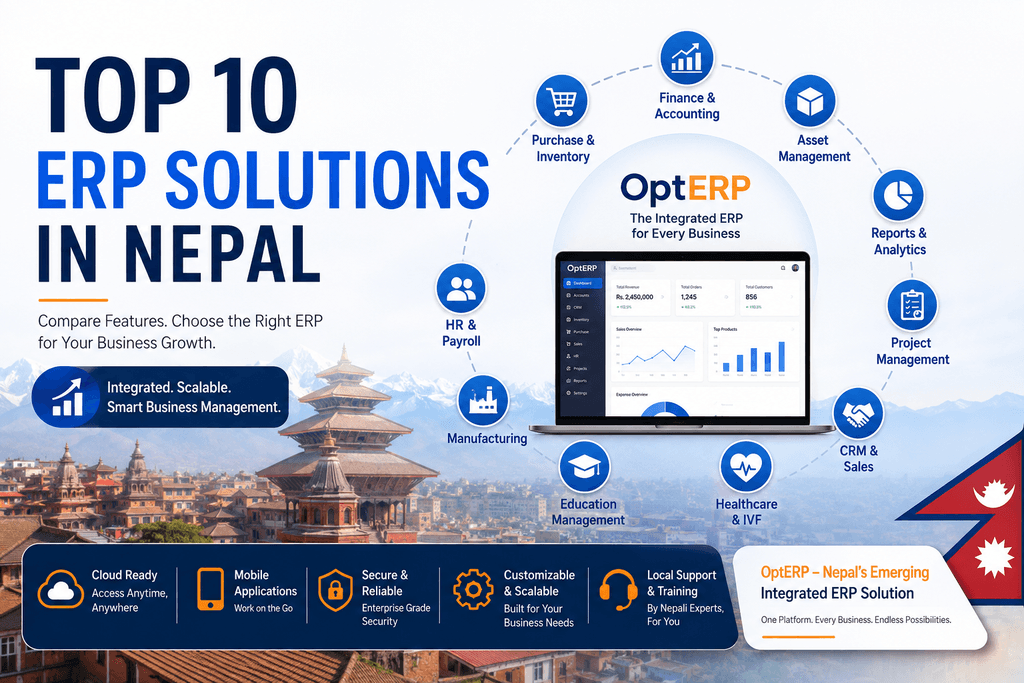
OptERP is one example of a locally positioned ERP platform that aims to address these requirements while supporting different industries and business sizes.
Defining ERP Needs in the Nepalese Context
An ERP system should be selected according to the organization's actual operational requirements rather than simply choosing the system with the longest feature list.
The first step is therefore to understand:
- What problems does the business currently have?
- Which processes are inefficient?
- Which departments need integration?
- What information does management need?
- Which processes should be automated?
- What local compliance requirements must the system support?
- How much can the business realistically invest?
- How quickly does the organization need the system to become operational?
For example, a small trading company may prioritize:
- Accounting
- Inventory
- Sales
- Purchasing
- Customer management
A manufacturing company may require:
- Production planning
- Bill of materials
- Raw material management
- Procurement
- Inventory
- Quality control
- Accounting
A hospital may require:
- Patient management
- Appointment scheduling
- Pharmacy
- Laboratory
- Billing
- Inventory
- Reporting
Therefore, the best ERP in Nepal is not necessarily the same for every business.
The right ERP is the one that aligns with the organization's size, industry, workflows, budget, and future growth.
Steps for Defining ERP Requirements
Before contacting ERP vendors, businesses should create a structured requirements document.
1. Identify Stakeholders
Include representatives from departments that will actually use the ERP.
This may include:
- Management
- Finance and accounting
- HR
- Sales
- Procurement
- Inventory
- Operations
- Manufacturing
- IT
2. Identify Existing Problems
Document the problems with the current system.
For example:
- Duplicate data entry
- Manual reporting
- Inventory inaccuracies
- Delayed financial reports
- Poor communication between departments
- Lack of real-time information
- Difficult approval processes
3. Define Required Features
Separate requirements into three categories:
| Requirement | Meaning | Example |
|---|---|---|
| Must Have | Essential for operations | Accounting, inventory |
| Should Have | Important but not immediately critical | CRM, advanced reports |
| Nice to Have | Useful additional capability | AI analytics, automation |
This prevents businesses from paying for unnecessary functionality.
4. Define Expected ROI
ERP investment should have measurable business objectives.
- Possible KPIs include:
- Reduced inventory costs
- Faster invoice processing
- Reduced manual work
- Faster reporting
- Improved inventory turnover
- Lower administrative costs
- Improved customer response time
Critical ERP Functions for Nepalese Businesses
ERP systems in Nepal need to address both general business requirements and local operational realities.
Some of the most important ERP modules include the following.
✔ Accounting and Finance
Accounting is usually the foundation of an ERP implementation.
Businesses may require:
- General ledger
- Accounts payable
- Accounts receivable
- VAT management
- TDS management
- Payroll
- Expense management
- Financial reporting
- Budgeting
- Multi-currency accounting
Businesses operating internationally may also need foreign currency transactions and exchange-rate management.
Because tax and financial requirements can change, businesses should also evaluate how frequently their ERP vendor provides regulatory and software updates.
The Inland Revenue Department is an important official source for Nepal's tax-related information, making it useful for businesses and ERP implementation teams when evaluating tax and compliance requirements.
✔ Inventory Management
Inventory management is particularly important for businesses involved in:
- Retail
- Wholesale
- Trading
- Manufacturing
- Distribution
- Healthcare
- Construction
An ERP should ideally provide visibility into:
- Stock levels
- Warehouses
- Stock movements
- Purchase orders
- Sales orders
- Reorder levels
- Product costs
- Batch and serial numbers where applicable
Real-time inventory visibility can help businesses reduce:
- Overstocking
- Stockouts
- Manual errors
- Unnecessary purchases
- Inventory losses
✔ Supply Chain and Procurement
Businesses that import products or maintain complex supplier networks need strong procurement functionality.
Important capabilities can include:
- Supplier management
- Purchase requests
- Purchase orders
- Approval workflows
- Goods receipts
- Supplier invoices
- Procurement reports
- Inventory integration
For Nepalese companies involved in international trade, ERP systems may also need to support processes associated with imports, landed costs, multiple currencies, and supplier documentation.
✔ Customer Relationship Management
ERP selection should not focus only on finance and inventory.
For businesses with large customer bases, CRM functionality can help manage:
- Leads
- Customers
- Sales opportunities
- Quotations
- Sales orders
- Customer communication
- Follow-ups
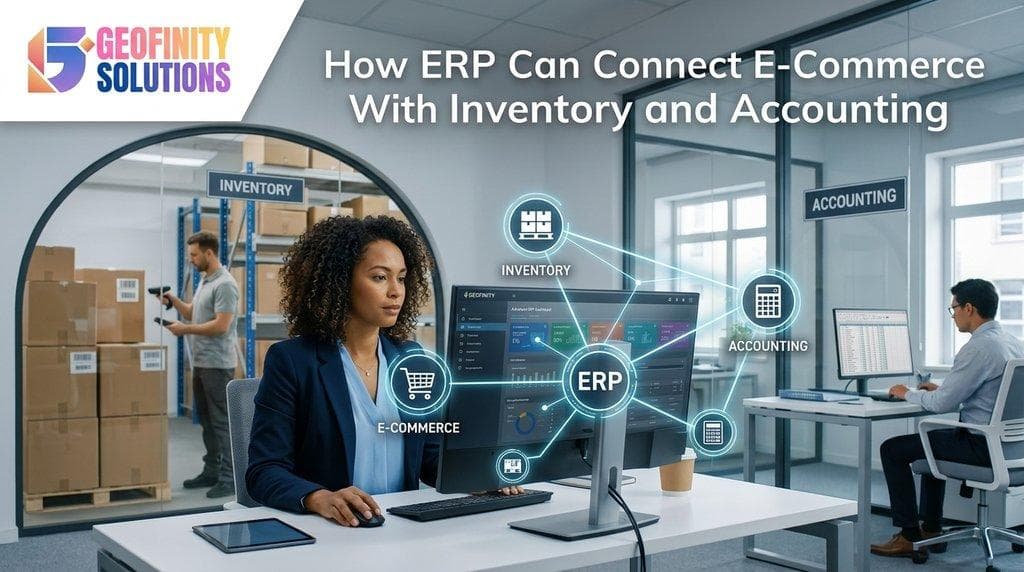
- Sales performance
Integrating CRM with accounting and inventory can create a more complete view of the customer lifecycle.
For example:
Lead → Quotation → Sales Order → Inventory → Invoice → Payment
Without integration, these steps may require multiple systems and repeated data entry.
✔ Human Resource and Payroll Management
Growing organizations also need to consider HR functionality.
An ERP may integrate:
- Employee records
- Attendance
- Leave management
- Payroll
- Recruitment
- Employee expenses
- Performance management
- Organizational structures
For larger businesses, integrating HR and finance can reduce repetitive work and improve payroll reporting.
✔ Manufacturing and Production Management
Manufacturing businesses have more complex ERP requirements.
A manufacturing ERP may need to support:
- Bill of materials
- Production planning
- Work orders
- Raw material management
- Finished goods
- Production costs
- Work-in-progress
- Quality control
- Warehouse management
For manufacturers in Nepal, an ERP should be evaluated based on actual production workflows rather than generic manufacturing checklists.
What Makes ERP Selection in Nepal Different?
ERP selection in Nepal requires more than comparing international feature lists.
Businesses should evaluate whether the system fits the local operating environment.
Important Nepal-specific considerations include:
- VAT and tax requirements
- TDS processes
- Local financial workflows
- Banking integration
- Import and export activities
- Multi-currency transactions
- Nepali and English language requirements
- Local reporting requirements
- Industry-specific workflows
- Local implementation support
- Data hosting and security
- Software customization
- Vendor responsiveness
This is where understanding the Nepal ERP market becomes particularly important.
A globally recognized ERP may offer extensive functionality, but a local or locally experienced vendor may have stronger familiarity with specific business processes and implementation requirements in Nepal.
ERP Budgeting in Nepal
ERP investment varies significantly depending on:
- Number of users
- Number of modules
- Business size
- Customization requirements
- Implementation complexity
- Integration requirements
- Deployment model
- Training requirements
- Support requirements
Instead of treating ERP as a one-time software purchase, businesses should evaluate the Total Cost of Ownership (TCO).
ERP Cost Components
| Cost Component | What It Includes |
|---|---|
| Software | License or subscription |
| Implementation | Configuration and delpoyment |
| Customization | Changes for specific requirements |
| Integration | Connecting external systems |
| Data Migration | Moving existing business data |
| Training | Employee and administrator training |
| Infrastructure | Servers or cloud resources |
| Support | Maintenance and technical assistance |
| Upgrades | Future software updates |
The original estimate of NPR 5 lakhs to NPR 50 lakhs can be useful as a rough planning range for some implementations, but it should not be treated as a universal Nepal ERP price. Actual costs vary considerably between vendors, business sizes, modules, and implementation requirements.
A better approach is to request a detailed quotation based on the company's actual requirements.
Cloud ERP vs. On-Premise ERP in Nepal
One of the most important decisions is choosing the deployment model.
✦ Cloud ERP
With cloud ERP, the software and infrastructure are hosted in a managed environment.
Advantages
- Lower initial infrastructure investment
- Easier remote access
- Faster deployment
- Easier scalability
- Centralized maintenance
- Automatic or managed updates
Considerations
- Recurring subscription costs
- Internet dependency
- Data hosting considerations
- Vendor dependency
- Connectivity requirements
✦ On-Premise ERP
On-premise ERP is hosted on the organization's own infrastructure.
Advantages
- Greater infrastructure control
- Potentially greater customization flexibility
- Internal data hosting
- Can be suitable for organizations with established IT infrastructure
Considerations
- Higher infrastructure requirements
- Server maintenance
- Backup responsibility
- Security management
- Upgrade complexity
- Higher IT administration requirements
For many SMEs, cloud ERP can be attractive because it reduces the need for significant upfront infrastructure investment.
However, the right choice depends on the organization's size, IT capabilities, security requirements, budget, and operational environment.
ERP Implementation Timeline in Nepal
Implementation timelines vary depending on complexity.
A relatively simple ERP implementation may take a few months, while a large enterprise implementation involving multiple branches, departments, integrations, and customized workflows can take significantly longer.
A typical implementation process may look like:
Requirement Analysis
↓
ERP Vendor Selection
↓
Process Mapping
↓
System Configuration
↓
Customization
↓
Data Migration
↓
Integration
↓
Testing
↓
Employee Training
↓
Go-Live
↓
Post-Implementation Support
The important point is that implementation should not be rushed simply to meet an arbitrary deadline.
A poorly configured ERP can create operational problems even if the software itself is technically capable.
Key ERP Selection Criteria for Nepal
1. Business Requirements
Start with the business rather than the software.
Ask:
- What processes need improvement?
- Which departments need integration?
- Which reports are essential?
- Which workflows should be automated?
2. Local Regulatory Understanding
The vendor should understand the regulatory environment relevant to the business.
This is especially important for:
- Accounting
- Tax
- Payroll
- Financial reporting
- Invoicing
Businesses should verify current regulatory requirements directly from official government sources rather than relying exclusively on a software vendor's interpretation.
3. Deployment Model
Compare:
- Cloud ERP
- On-premise ERP
- Hybrid deployment
The decision should consider cost, security, connectivity, scalability, and internal IT capabilities.
4. Vendor Expertise in Nepal
Vendor experience can significantly affect implementation success.
Ask potential vendors:
- How many businesses have you implemented ERP for?
- Have you worked in our industry?
- Can you provide local references?
- Who will handle implementation?
- How is support provided?
- How frequently is the system updated?
Local market understanding can be particularly valuable when the ERP needs to support Nepal-specific business processes.
5. Scalability
An ERP should not only solve today's problems.
It should also support future growth.
Consider whether the system can support:
- More users
- More branches
- More warehouses
- New products
- New business units
- Additional modules
- E-commerce
- Advanced analytics
- External integrations
A growing company should avoid selecting a system that becomes restrictive after a few years.
6. Support and Training
ERP implementation does not end when the system goes live.
Employees need training and organizations need ongoing support.
Evaluate:
- Implementation support
- User training
- Documentation
- Technical support
- Response times
- Remote support
- On-site support
- Upgrade assistance
For Nepalese businesses, having accessible local support can be particularly valuable.
7. System Integration
Modern businesses rarely operate using a single application.
An ERP may need to integrate with:
- Banking systems
- Payment platforms
- E-commerce platforms
- CRM systems
- Payroll systems
- Government-related services
- Reporting tools
- Existing legacy applications
Nepal's payment ecosystem is also increasingly regulated and digitized. Nepal Rastra Bank's Payment Systems Department oversees payment system operators and service providers and publishes payment-system directives and oversight information.
Nepal Rastra Bank Payment Systems Department
This makes integration and financial-system compatibility an important consideration for businesses evaluating modern ERP systems.
8. Data Security and Backup
Businesses should understand how their ERP handles:
- User permissions
- Authentication
- Data backups
- Encryption
- Audit logs
- Disaster recovery
- Access control
- Data retention
Financial and customer information is highly sensitive, making security an important ERP selection criterion.
9. Customization vs. Configuration
Businesses often assume that more customization is always better.
It isn't.
Excessive customization can increase:
- Implementation costs
- Maintenance requirements
- Upgrade difficulties
- Vendor dependency
Where possible, organizations should first determine whether the ERP's existing configuration options can meet their requirements.
Customization should generally be reserved for processes that provide meaningful business value.
Vendor Selection in Nepal
Nepal's ERP market includes both local and international solutions.
Businesses may evaluate platforms from:
- Local ERP providers
- Regional ERP vendors
- International enterprise software companies
- Open-source ERP ecosystems
- Specialized industry software providers
International vendors such as SAP, Oracle, and Microsoft offer extensive enterprise capabilities and may be suitable for larger organizations with complex requirements.
Local ERP vendors and platforms can provide advantages in areas such as:
- Local market understanding
- Accessibility
- Implementation support
- Customization
- Local business workflows
- Potentially lower implementation complexity
The correct decision should therefore be based on business fit rather than vendor reputation alone.
OptERP as a Local ERP Option for Nepalese Businesses
OptERP, developed by Geofinity Solutions, is positioned as an integrated ERP platform for businesses and organizations across multiple industries.
Geofinity currently highlights Enterprise Resource Planning as one of its core services and describes OptERP as a solution for improving efficiency, planning, and business operations.
OptERP is designed around a modular approach, with capabilities covering areas such as:
- Finance and accounting
- Inventory
- Procurement
- Sales
- CRM
- Human resources
- Payroll
- Manufacturing
- Healthcare
- Education
- Project management
- Asset management
- Reporting
Its current positioning also includes specialized solutions for industries such as healthcare, fertility clinics, manufacturing, education, and SMEs.
The value of a platform such as OptERP is therefore not simply its list of modules.
For a Nepalese organization, the more important question is whether the platform can be configured and implemented around the organization's actual workflows and requirements.
Why Local ERP Knowledge Matters?
ERP implementation involves much more than installing software.
It requires understanding how an organization actually operates.
For example, a Nepalese trading company may need to manage:
Supplier → Purchase → Import → Inventory → Sales → Invoice → Payment → Accounting
A manufacturing organization may require:
Raw Materials → Production → Quality Control → Finished Goods → Warehouse → Sales
A healthcare organization may require:
Patient → Appointment → Consultation → Laboratory/Pharmacy → Billing → Reporting
A good ERP implementation should connect these workflows rather than simply digitizing individual tasks.
This is why vendor knowledge, implementation experience, and industry understanding are as important as the software itself.
Comparing ERP Vendors in Nepal
When comparing ERP solutions, businesses should avoid relying only on feature counts.
Instead, create a structured evaluation matrix.
| Evaluation Area | Questions to Ask |
|---|---|
| Business Fit | Does the ERP match our workflows? |
| Local Requirements | Does it support Nepal-specific requirements? |
| Accounting | Can it handle our financial processes? |
| Inventory | Can it manage our warehouses and stock? |
| Industry | Does the vendor understand our sector? |
| Integration | Can it connect with our existing systems? |
| Scalability | Can it grow with our business? |
| Security | How is business data protected? |
| Implementation | What is the deployment methodology? |
| Support | What happens after go-live? |
| Customization | What can be configured or customized? |
| Cost | What is the total cost of ownership? |
| Roadmap | How will the product evolve? |
A scoring system can make the decision more objective.
For example:
| Criterion | Weight |
|---|---|
| Business Requirements | 20% |
| Functionality | 15% |
| Local Market Fit | 15% |
| Implementation & Support | 15% |
| Scalability | 10% |
| Integration | 10% |
| Security | 5% |
| Cost | 10% |
Each vendor can then be scored against the same criteria.
ERP Selection Mistakes to Avoid
▸ Choosing Based Only on Price
The cheapest ERP may become expensive if implementation, customization, support, and upgrades create additional costs.
▸ Choosing Based Only on Features
More features do not necessarily mean a better fit.
▸ Ignoring Implementation
Even excellent ERP software can fail when implementation is poorly managed.
▸ Over-Customizing
Too much customization can make upgrades and maintenance difficult.
▸ Ignoring Employee Training
Employees must understand how the new system changes their workflows.
▸ Failing to Plan Data Migration
Poor data migration can introduce incorrect or duplicated records into the new system.
▸ Not Checking Vendor Support
The relationship with the ERP vendor continues after implementation.
▸ Ignoring Scalability
An ERP should be able to support future business growth.
Questions to Ask an ERP Vendor Before Signing
Before selecting an ERP vendor in Nepal, businesses should ask:
- What industries do you specialize in?
- Can you provide references from similar businesses?
- What modules are included?
- What requires additional customization?
- What is the implementation process?
- How long will implementation take?
- How will existing data be migrated?
- What integrations are supported?
- How are backups handled?
- How is data secured?
- What training is included?
- What support is available after implementation?
- How are software updates delivered?
- What happens if the business needs additional modules?
- What is the complete five-year cost of ownership?
These questions can reveal important differences between vendors that may not appear in a standard product demonstration.
The Future of ERP in Nepal
The ERP market in Nepal is likely to become increasingly influenced by:
✔ Cloud Computing
More businesses are moving toward cloud-based systems because of accessibility, scalability, and reduced infrastructure requirements.
✔ Artificial Intelligence
AI can improve:
- Forecasting
- Business analytics
- Customer service
- Financial analysis
- Inventory planning
- Automation
✔ Mobile ERP
Managers and employees increasingly expect to access business information from smartphones and tablets.
✔ Advanced Analytics
Businesses want more than historical reports.
They increasingly need:
- Real-time dashboards
- Performance indicators
- Forecasting
- Predictive analytics
- Data-driven decision-making
✔ Industry-Specific ERP
Rather than using completely generic systems, organizations are increasingly looking for ERP solutions adapted to their industries.
Healthcare, manufacturing, education, retail, construction, and other sectors have different workflows.
✔ Greater Integration
Future ERP systems will increasingly operate as part of larger digital ecosystems connecting:
ERP + CRM + Banking + E-commerce + Payments + AI + Analytics
This will make integration capabilities increasingly important when selecting an ERP.
How to Choose the Right ERP for Your Business in Nepal?
There is no universal "best ERP in Nepal."
The right choice depends on:
- Business size
- Industry
- Number of users
- Number of branches
- Budget
- Required modules
- Local compliance requirements
- Integration needs
- Scalability
- Implementation timeline
- Vendor support
A small business may need a simple and affordable system.
A growing SME may require an integrated cloud ERP.
A large enterprise may need advanced analytics, multi-company support, complex workflows, and extensive integration.
The selection process should therefore begin with the business, not the vendor.
Frequently Asked Questions (FAQ's):
Q. What is ERP?
ERP, or Enterprise Resource Planning, is software that integrates multiple business processes into a centralized system. Common ERP modules include accounting, inventory, procurement, sales, HR, manufacturing, CRM, and reporting.
Q. Why do businesses in Nepal need ERP?
ERP can help Nepalese businesses reduce manual work, integrate departments, improve reporting, manage inventory, automate workflows, and gain better visibility into business operations.
Q. What should I consider when choosing an ERP in Nepal?
Businesses should consider functionality, local requirements, tax and accounting workflows, integration, implementation, scalability, security, vendor expertise, support, and total cost of ownership.
Q. Is cloud ERP better than on-premise ERP?
Neither is universally better. Cloud ERP can offer easier deployment and scalability, while on-premise ERP can provide greater infrastructure control. The right option depends on the organization's requirements, budget, security considerations, and IT capabilities.
Q. How much does ERP cost in Nepal?
ERP implementation costs vary considerably depending on business size, modules, customization, integrations, deployment model, users, and implementation complexity. Businesses should request a detailed proposal rather than relying on a single standard price.
Q. How long does ERP implementation take?
Implementation can range from a few months for relatively simple deployments to significantly longer periods for large organizations with complex workflows, integrations, data migration, and customization.
Q. What ERP features are important for Nepalese businesses?
Important capabilities can include accounting, VAT and tax-related workflows, inventory, procurement, CRM, HR, payroll, reporting, multi-currency support, integrations, and industry-specific functionality.
Q. Is OptERP suitable for Nepalese businesses?
OptERP is a locally positioned ERP platform developed by Geofinity Solutions. Its platform covers multiple business functions and provides specialized solutions for industries including healthcare, fertility, manufacturing, education, and SMEs. Businesses should evaluate the platform against their own requirements before making a purchasing decision.
Q. Why consider a local ERP vendor in Nepal?
A local ERP vendor may offer stronger familiarity with Nepal's business environment, accessible implementation support, local customization, and easier communication. However, businesses should compare local and international vendors objectively based on their actual requirements.
Q. What is the difference between ERP software and accounting software?
Accounting software primarily focuses on financial management. ERP goes further by connecting accounting with functions such as inventory, sales, procurement, HR, manufacturing, CRM, and other business processes.
Q. Can ERP integrate with banking and payment systems?
Depending on the ERP and available integrations, business systems can connect with banking, payment, and other financial platforms. Businesses should verify the specific integrations supported by the vendor before implementation.
Nepal Rastra Bank's Payment Systems Department provides regulatory and oversight information for Nepal's payment ecosystem.
Nepal Rastra Bank Payment Systems Department
Conclusion
Choosing an ERP in Nepal's evolving business environment requires more than comparing software features and prices.
Businesses need to consider local requirements, accounting and tax workflows, inventory, procurement, banking and payment integrations, industry-specific processes, implementation expertise, scalability, security, support, and long-term cost.
The right ERP should not simply digitize existing processes.
It should help the organization improve them.
For some businesses, international platforms such as SAP, Oracle, or Microsoft Dynamics may provide the enterprise capabilities they require. For others, locally positioned platforms may offer a better balance of functionality, implementation support, customization, and understanding of the Nepalese market.
OptERP, developed by Geofinity Solutions, is one example of a locally positioned ERP platform serving multiple industries and business requirements.
Learn More About Geofinity Solutions
The most important principle is simple:
Don't choose an ERP because it has the most features. Choose it because it solves your business problems, fits your market, and can grow with your organization.
As Nepalese businesses continue their digital transformation, ERP systems will increasingly become a foundation for automation, integration, data-driven decision-making, and sustainable growth.
The best ERP investment is therefore not simply the software with the longest feature list.
It is the system that creates the strongest fit between technology, business processes, people, and Nepal's market environment.