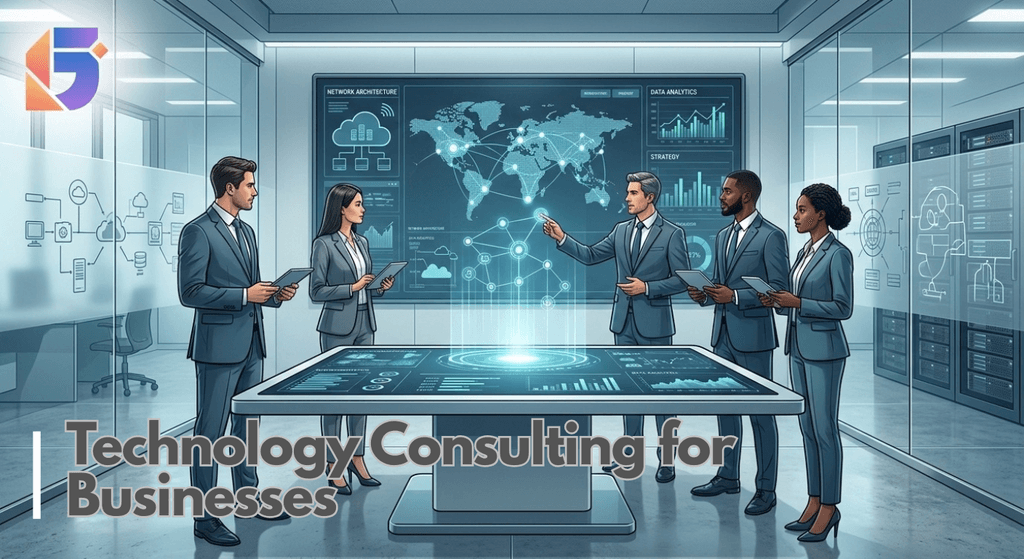
Technology Consulting for Businesses: When Do You Need an IT Partner?
Technology is no longer just an internal support function for businesses. Software, cloud platforms, cybersecurity, data, websites, business applications, automation, and digital infrastructure increasingly influence how organizations operate and serve customers.
But choosing the right technology can become difficult as a business grows.
Should you move to the cloud? Do you need an ERP system? Is your current network secure? Should you develop custom software or purchase an existing platform? How should different business applications communicate with each other?
These questions are where technology consulting for businesses becomes valuable.
A technology consultant or IT partner can help an organization understand its technology requirements, evaluate options, plan implementation, and align technology investments with business objectives.
The goal is not simply to introduce more technology.
It is to make sure that the right technology solves the right business problem.
What Is Technology Consulting for Businesses?
Technology consulting for businesses is the process of providing expert advice and practical guidance to help organizations plan, select, implement, manage, and improve technology systems.
Technology consultants can work across areas such as:
- IT infrastructure
- Software development
- ERP systems
- Cloud computing
- Cybersecurity
- Business applications
- Data management
- Digital transformation
- IT strategy
- System integration
- Automation
- Website and web applications
- Technical support
Instead of treating technology decisions as isolated purchases, consulting takes a broader approach.
For example, a business might think it needs new accounting software.
A technology consultant may discover that the bigger problem is actually disconnected sales, inventory, purchasing, and accounting systems.
In that situation, simply purchasing another accounting application may not solve the underlying issue.
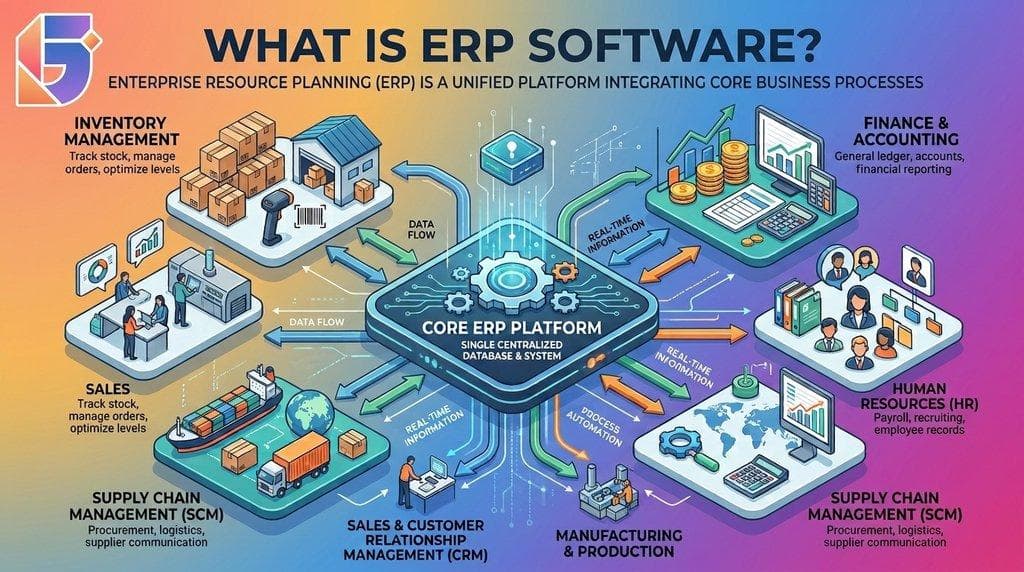
A broader business technology assessment could lead to an integrated ERP solution instead.
What Does an IT Partner Do?
An IT partner works with a business over time to provide technology expertise, rather than only solving individual technical problems.
The exact responsibilities vary depending on the organization and service provider.
An IT partner may help with:
| Area | Typical IT Partner Support |
|---|---|
| IT strategy | Technology planning and roadmaps |
| Infrastructure | Networks, servers, devices and systems |
| Cloud | Cloud migration and management |
| Cybersecurity | Security assessment and protection |
| Software | Selection, development and implementation |
| ERP | ERP selection, customization and implementation |
| Integration | Connecting different business systems |
| Data | Data management and reporting |
| Automation | Streamlining repetitive processes |
| Support | Technical troubleshooting and maintenance |
| Digital transformation | Modernizing business processes |
The key difference is that an IT partner can provide ongoing technology guidance, while a one-time IT service may focus on a specific technical task.
Why Businesses Need Technology Consulting?
Technology decisions can become complicated because businesses have different requirements.
A solution that works for one organization may be completely inappropriate for another.
For example, a small retail company may prioritize:
- Point-of-sale integration
- Inventory management
- Accounting
- E-commerce
A manufacturing company may need:
- Production planning
- Supply chain management
- Inventory
- Procurement
- Quality management
- ERP
- Machine or system integration
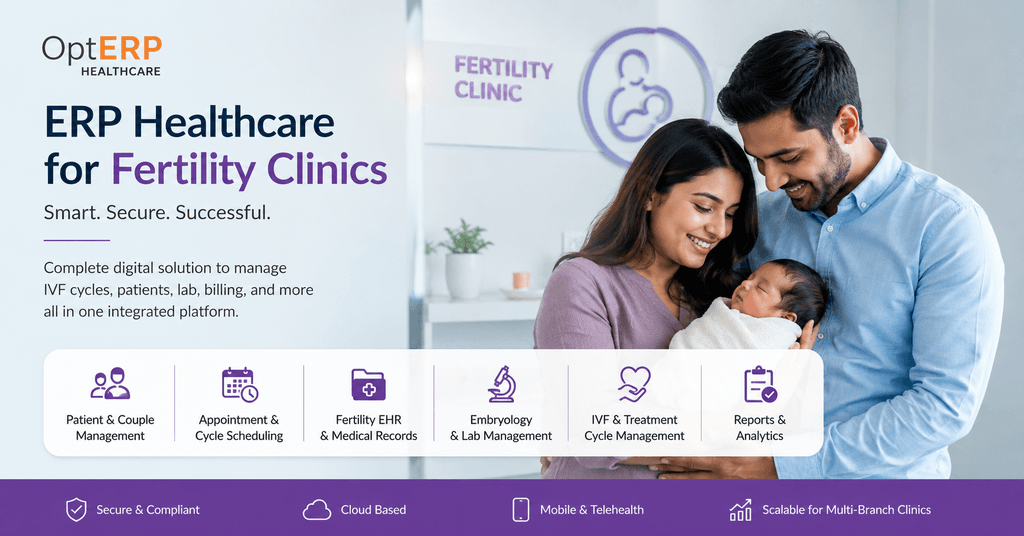
A healthcare organization may require:
- Patient management
- Electronic medical records
- Billing
- Laboratory systems
- Appointment management
- Reporting
- Data security
Technology consulting helps connect these requirements with practical technology decisions.
10 Signs Your Business May Need an IT Partner
Not every business needs a dedicated IT partner.
However, several warning signs can indicate that external technology expertise could provide value.
1. Technology Decisions Are Becoming Difficult
Technology changes quickly.
Businesses may have to evaluate:
- Cloud platforms
- ERP software
- CRM systems
- Cybersecurity tools
- AI applications
- Data platforms
- Business automation
- Communication systems
If management is unsure which technologies are actually necessary, an IT consultant can help evaluate options based on business requirements.
2. Your Business Uses Too Many Disconnected Systems
A business may use separate applications for:
- Accounting
- Sales
- Inventory
- HR
- Payroll
- Customer management
- Procurement
Each application may work independently.
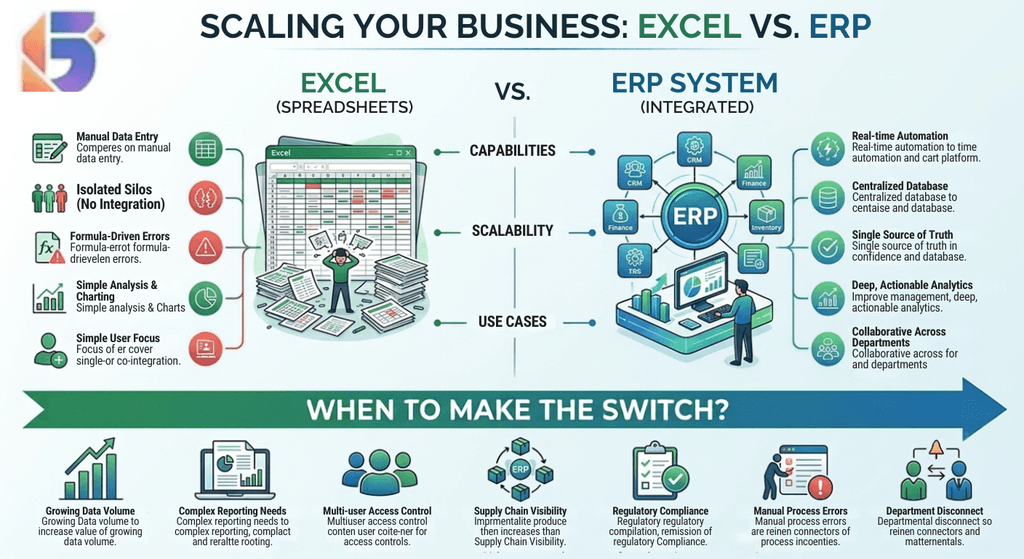
The problem occurs when employees need to move information between them manually.
For example:
Sales System → Excel → Accounting System → Management Report
This creates unnecessary work and can introduce inconsistencies.
Technology consulting can help identify opportunities for system integration or ERP implementation.
3. Employees Spend Too Much Time on Manual Processes
Consider a company where employees repeatedly:
- Copy customer information
- Prepare reports manually
- Enter invoices
- Transfer inventory records
- Send approval emails
- Reconcile spreadsheets
- Create repetitive documents
These processes may be candidates for automation.
An IT consultant can evaluate the workflow and determine whether automation, integration, or software changes could reduce manual work.
4. Your Business Is Growing
Technology requirements often change as businesses expand.
Growth can introduce:
- More employees
- More customers
- More branches
- More transactions
- More data
- More devices
- More software
- More security requirements
A technology setup that worked for a 10-person company may not be suitable for a 100-person organization.
An IT partner can help create a technology roadmap that considers future requirements rather than only today's problems.
5. Your Business Is Moving to the Cloud
Cloud technology can provide flexibility and remote access, but migration requires planning.
Businesses need to consider:
- Which systems should move?
- What data needs to be migrated?
- What security controls are required?
- How will employees access applications?
- What happens if internet connectivity fails?
- How will backups work?
- What will the long-term cost be?
A technology consultant can assess the existing infrastructure and develop a cloud migration strategy.
6. Cybersecurity Is Becoming a Concern
Cybersecurity is no longer an issue limited to large enterprises.
Businesses of all sizes manage valuable information such as:
- Customer data
- Financial information
- Employee records
- Passwords
- Business documents
- Intellectual property
- Operational information
Common security risks include:
- Phishing
- Weak passwords
- Malware
- Unauthorized access
- Unpatched software
- Data loss
- Poor access controls
The Cybersecurity and Infrastructure Security Agency (CISA) recommends practices such as multifactor authentication, software updates, backups, and employee cybersecurity awareness as part of organizational security.
An IT partner can help businesses assess security risks and establish appropriate technical and organizational controls.
7. Your Website or Software Is Becoming Critical to Operations
For some businesses, the website is simply an online presence.
For others, it is part of the actual business operation.
Examples include:
- E-commerce websites
- Customer portals
- Booking platforms
- Online payment systems
- Employee portals
- Business dashboards
- SaaS platforms
- Custom web applications
When technology becomes directly connected to revenue or operations, reliability, security, scalability, and maintenance become increasingly important.
An IT partner can help establish appropriate development, hosting, monitoring, backup, and maintenance practices.
8. You Are Considering ERP Implementation
ERP implementation is a major business technology decision.
Businesses need to determine:
- Which modules are required?
- Which processes should be automated?
- How should existing data be migrated?
- What integrations are necessary?
- How should users be trained?
- Should the system be cloud-based or on-premise?
- How much customization is actually necessary?
An IT partner can help with requirements analysis, ERP selection, implementation, integration, training, and ongoing support.
9. Management Cannot Easily Access Business Information
Business decisions depend on information.
If management has difficulty answering questions such as:
- What are our current sales?
- What is our inventory position?
- What are our outstanding receivables?
- Which products are performing?
- What are our monthly expenses?
- How are different branches performing?
the problem may not be a lack of data.
It may be a data integration and reporting problem.
Technology consulting can help businesses identify ways to connect systems and build more effective reporting environments.
10. You Do Not Have Enough Internal IT Expertise
Not every business needs a large internal IT department.
A growing company may have only one or two employees responsible for technology.
Those employees may handle:
- Computers
- Networks
- Software
- Website
- Security
- Backups
- User support
As technology becomes more complex, this can become difficult.
An external IT partner can provide additional expertise when the organization does not need or cannot justify a large internal technology team.
Technology Consulting vs IT Support: What's the Difference?
These terms are sometimes used interchangeably, but they can represent different services.
IT support generally focuses on keeping existing technology working.
Examples include:
- Fixing computer problems
- Troubleshooting network issues
- Installing software
- Resetting accounts
- Resolving technical problems
Technology consulting is more strategic.
It can involve:
- Technology planning
- System selection
- IT audits
- Digital transformation
- Cloud strategy
- ERP planning
- Cybersecurity assessment
- Software architecture
- System integration
Simple comparison
| IT Support | Technology Consulting |
|---|---|
| Fixes current problems | Plans future improvements |
| Reactive | Strategic/proactive |
| Maintains systems | Evaluates systems |
| Troubleshooting | Business technology planning |
| User support | Technology strategy |
| Day-to-day operations | Long-term transformation |
Many businesses can benefit from both.
What Services Can a Technology Consultant Provide?
The scope of technology consulting can vary significantly.
▸ IT Strategy and Planning
An IT consultant can help develop a technology roadmap based on business objectives.
A roadmap might cover:
Current State → Problems → Priorities → Technology Options → Implementation → Future Improvements
This helps prevent businesses from making technology purchases without understanding the larger strategy.
▸ ERP Consulting
ERP is one of the most important areas where businesses may require technology consulting.
Consultants can help with:
- Business process analysis
- ERP requirements
- Software evaluation
- Module selection
- Implementation planning
- Data migration
- Integration
- Customization
- User training
- Post-implementation support
For businesses in Nepal, ERP evaluation may also need to consider local accounting practices, tax requirements, business processes, localization, and support availability.
▸ Cloud Consulting
Cloud consulting can help businesses determine:
- Which systems should move to the cloud
- Which applications should remain local
- What cloud architecture is appropriate
- How data should be migrated
- How users should access systems
- What security measures are required
Cloud adoption should be based on business requirements rather than simply following a technology trend.
▸ Cybersecurity Consulting
Cybersecurity consulting can include:
- Security assessments
- Access-control reviews
- Security policies
- Backup planning
- Endpoint protection
- Network security
- Employee awareness
- Incident response planning
A consultant can help identify weaknesses and prioritize improvements based on business risk.
▸ Software Development Consulting
Sometimes existing software cannot meet a business's requirements.
A technology consultant can help determine whether the business should:
Buy → Customize → Integrate → Build
This decision should consider:
- Cost
- Time
- Business requirements
- Scalability
- Maintenance
- Integration
- Security
Custom development can be valuable when existing solutions cannot efficiently address a specific business process.
▸ System Integration
Businesses often accumulate technology over time.
For example:
Website + CRM + ERP + Accounting + Payment Gateway + Email Marketing
If these systems do not communicate properly, employees may have to move data manually.
System integration can connect applications through APIs, middleware, data synchronization, or other appropriate technologies.
The goal is to create a more connected technology environment.
▸ Digital Transformation Consulting
Digital transformation is broader than simply purchasing new software.
It involves changing how an organization uses technology to improve business processes and customer experiences.
For example:
Traditional Process:
Customer → Paper Form → Employee Entry → Spreadsheet → Manual Report
Digitized Process:
Customer → Online Form → Integrated System → Automated Workflow → Dashboard
The technology is only one part of the transformation.
Process design, people, data, and organizational adoption also matter.
When Should You Hire an IT Partner?
There is no universal company size at which an organization should hire an IT partner.
Instead, consider the following situations.
Hire or engage an IT partner when:
- Technology decisions are becoming complex.
- Your internal IT team lacks specialized expertise.
- Systems are disconnected.
- Business processes are highly manual.
- Cybersecurity requirements are increasing.
- You are planning ERP implementation.
- You are migrating to cloud systems.
- Your business is expanding rapidly.
- Your website or software is business-critical.
- Management needs better data and reporting.
- You need to develop a long-term technology roadmap.
What Are the Benefits of Having an IT Partner?
1. Access to Specialized Expertise
An external IT partner can provide access to skills that may be expensive or unnecessary to maintain internally.
These can include:
- Cloud architecture
- Cybersecurity
- ERP
- Software development
- Data engineering
- System integration
- IT strategy
2. Better Technology Planning
Instead of purchasing technology reactively, businesses can develop a structured roadmap.
This can help answer:
What do we need now?
What can wait?
What should we invest in next?
3. Reduced Technology Complexity
A technology partner can help businesses simplify their technology environment.
The objective should not be to add more applications.
It should be to create a more effective technology ecosystem.
4. Better Business Continuity
Technology failures can disrupt business operations.
An IT partner can help organizations plan for:
- Backups
- Disaster recovery
- Redundancy
- Monitoring
- Security incidents
- System failures
Business continuity planning helps organizations prepare for disruptions rather than reacting only after something goes wrong.
5. Support for Business Growth
Technology should evolve with the business.
An IT partner can help plan for:
- New branches
- Additional employees
- Increased transactions
- New software
- New integrations
- Cloud migration
- Automation
This can make technology investment more intentional.
How Much Does Technology Consulting Cost?
There is no single standard price for technology consulting.
Costs depend on factors such as:
- Project scope
- Business size
- Number of systems
- Technical complexity
- Required expertise
- Consulting duration
- Implementation requirements
- Custom development
- Integration requirements
A simple IT assessment may require significantly less investment than an organization-wide ERP implementation or digital transformation project.
Businesses should therefore compare consulting proposals based on scope, deliverables, expertise, implementation support, and long-term value, rather than comparing hourly rates alone.
Technology Consulting for Businesses in Nepal
Nepalese businesses are increasingly adopting digital tools for accounting, communication, sales, e-commerce, customer management, HR, inventory, and other business processes.
This creates opportunities—but also creates technology complexity.
A business may use:
- Accounting software
- ERP software
- Websites
- Mobile applications
- Cloud platforms
- Payment systems
- CRM
- Social media
- HR software
- Inventory systems
The challenge is ensuring that these technologies actually support business operations.
When evaluating IT consulting services in Nepal, businesses should consider:
| Factor | What to Evaluate |
|---|---|
| Local expertise | Understanding of Nepalese business environments |
| Technical capability | Relevant technology and development skills |
| Industry experience | Experience with similar organizations |
| ERP expertise | Implementation and integration capabilities |
| Security | Security practices and risk assessment |
| Support | Availability of ongoing technical assistance |
| Scalability | Ability to support business growth |
| Communication | Clear reporting and documentation |
| Customization | Ability to address specific requirements |
| Long-term partnership | Ongoing technology planning |
For organizations operating in Nepal, local knowledge can also be important when technology projects involve accounting, tax, regulatory, infrastructure, or other locally specific requirements.
How to Choose the Right IT Partner?
Choosing an IT partner is different from purchasing software.
You are choosing an organization that may influence your technology decisions for years.
1. Understand Their Technical Expertise
Look for experience relevant to your requirements.
If you need ERP consulting, verify ERP experience.
If you need cloud migration, evaluate cloud expertise.
If you need custom software, review software development experience.
2. Review Previous Projects
Ask for relevant case studies or examples.
Look for projects with similar:
- Business size
- Industry
- Technology
- Complexity
- Business objectives
3. Evaluate Communication
Technology projects involve both technical and non-technical stakeholders.
A good technology partner should be able to explain technical concepts in language business decision-makers can understand.
4. Look Beyond Implementation
Ask what happens after launch.
Consider:
- Technical support
- Maintenance
- Updates
- Monitoring
- Training
- Documentation
- Future improvements
Technology is rarely a one-time project.
5. Understand the Total Cost
Ask about:
- Consulting
- Implementation
- Licensing
- Development
- Hosting
- Support
- Maintenance
- Future changes
A clear cost structure helps businesses plan technology investments more effectively.
Technology Consulting vs Hiring an Internal IT Team
Businesses sometimes ask whether they should hire employees or work with an external IT partner.
The answer depends on the organization's needs.
| Internal IT Team | External IT Partner |
|---|---|
| Directly employed | External expertise |
| Strong institutional knowledge | Broad technology experience |
| Always available during work hours | Availability depends on agreement |
| Higher fixed staffing costs | Flexible engagement models |
| Deep business familiarity | Access to specialized skills |
| Suitable for ongoing internal operations | Useful for projects and specialist requirements |
Many organizations use a hybrid approach.
Internal employees handle everyday technology requirements while an external partner provides specialist expertise for complex projects.
A Practical Technology Roadmap for Growing Businesses
Businesses do not need to transform everything at once.
A phased approach can be more manageable.
Phase 1: Assess
Identify current systems, problems, risks, and business requirements.
Phase 2: Stabilize
Address critical security, infrastructure, backup, and reliability issues.
Phase 3: Integrate
Connect systems that need to exchange information.
Phase 4: Automate
Identify repetitive processes that can be automated.
Phase 5: Analyze
Improve reporting, dashboards, and data visibility.
Phase 6: Scale
Prepare technology infrastructure and applications for future growth.
This approach allows businesses to prioritize technology investments instead of attempting a complete transformation simultaneously.
Common Technology Consulting Mistakes
▸ Choosing Technology Before Defining the Problem
Businesses sometimes begin with:
"Which software should we buy?"
A better starting point is:
"What business problem are we trying to solve?"
▸ Focusing Only on Price
The cheapest solution may not provide the required functionality, security, scalability, or support.
Total cost and long-term suitability matter.
▸ Ignoring Employees
A technically excellent system can fail if employees do not understand or adopt it.
Training and change management should be included in technology projects.
▸ Overcomplicating the Technology Stack
More software does not automatically mean better technology.
Businesses should aim for simplification and integration where possible.
▸ Treating Security as an Afterthought
Security should be considered when selecting and designing systems—not only after deployment.
Frequently Asked Questions (FAQ's):
Q. What is technology consulting for businesses?
Technology consulting helps businesses plan, select, implement, integrate, and improve technology according to their operational and strategic requirements.
Q. What does an IT consultant do?
An IT consultant can provide advice and services related to IT strategy, software, infrastructure, cloud computing, cybersecurity, ERP, integration, automation, and digital transformation.
Q. When does a business need an IT partner?
A business may benefit from an IT partner when technology becomes complex, internal expertise is limited, systems are disconnected, cybersecurity requirements increase, or major technology projects are planned.
Q. What is the difference between IT consulting and IT support?
IT support generally focuses on maintaining and troubleshooting existing systems, while IT consulting focuses more on technology planning, strategy, improvement, and transformation.
Q. Can small businesses use technology consulting services?
Yes. Small businesses can use consultants for specific projects such as cybersecurity assessments, cloud migration, software selection, website development, ERP implementation, or technology planning.
Q. Is an IT partner the same as an IT employee?
No. An IT partner is an external organization or provider that supplies technology expertise and services. Some businesses use an IT partner alongside their internal IT team.
Q. What technology services can a business outsource?
Businesses can outsource services such as cloud management, cybersecurity, software development, ERP implementation, IT support, system integration, infrastructure management, and technology consulting.
Q. How can an IT partner help with digital transformation?
An IT partner can assess current processes, identify technology opportunities, recommend suitable systems, integrate applications, automate workflows, and support implementation.
Q. How do I choose an IT consulting company in Nepal?
Evaluate relevant technical expertise, local experience, previous projects, communication, security practices, implementation capabilities, support services, scalability, and total cost.
Q. Does every business need an IT consultant?
No. Businesses with simple technology requirements and sufficient internal expertise may not need external consulting. Consulting becomes more useful as technology decisions and business processes become more complex.
Q. How much does IT consulting cost?
Costs vary based on project scope, duration, technical complexity, required expertise, implementation requirements, and ongoing support. Businesses should compare complete project scope and deliverables rather than price alone.
Q. Can technology consulting help reduce business costs?
It can help identify opportunities to eliminate redundant software, automate manual processes, integrate systems, improve infrastructure, and prioritize technology investments. Actual savings depend on the organization and implementation.
Q. What should an IT consulting project start with?
A good starting point is a technology and business assessment. This identifies current systems, pain points, risks, objectives, and priorities before recommending specific technologies.
Conclusion: When Do You Need an IT Partner?
Technology should support the business—not become another source of complexity.
If your organization is dealing with disconnected systems, manual processes, cybersecurity concerns, rapid growth, cloud migration, ERP implementation, or complex technology decisions, it may be time to consider professional technology consulting.
The purpose of an IT partner is not simply to fix computers or recommend software.
A capable technology partner can help your business understand where technology can create practical value, prioritize investments, integrate systems, improve security, and build a technology roadmap for future growth.
For businesses in Nepal, choosing the right IT consulting partner also means considering local business requirements, technical expertise, implementation capabilities, ongoing support, and the ability to understand your organization's specific operating environment.
The right technology strategy starts with the business problem—not the technology trend.
Looking for a Technology Partner?
Geofinity Pvt. Ltd. helps businesses in Nepal with technology, software, ERP, digital solutions, and business-focused IT services.
📍 Baluwatar 4, Kathmandu, Nepal
📧 [email protected]
📞 +977 9802372660
Contact Geofinity to discuss your business technology requirements.