10 Policy Reforms for a Globally Competitive Tech Economy
Nepal stands at a pivotal moment. With a young, tech-savvy population, a growing startup ecosystem, and increasing global connectivity, the country has the raw ingredients to emerge as a regional leader in digital innovation.
Yet, structural policy gaps continue to limit its potential.
To transform into a hub for AI, fintech, digital governance, and global tech talent, Nepal must move decisively. The following reforms provide a clear, strategic roadmap.
The Opportunity
Why Nepal Can Win in the Digital Economy
- Nepal already has several foundations needed for a digital-first economy:
- Young and tech-capable workforce
- Rapid internet and mobile penetration
- Rising freelancing and outsourcing potential
- Growing digital payment adoption
- Global demand for remote technology talent
Nepal's opportunity is not simply to consume technology. It is to build, export, and govern through technology.
Digital services can allow Nepalese companies and professionals to reach international markets without requiring the physical infrastructure traditionally associated with large export industries.
At the same time, digital government, AI, fintech, cloud infrastructure, cybersecurity, and data-driven services can improve productivity inside the country.
Challenge: Policy and regulatory bottlenecks are slowing growth.
Get more knowledge: Nepal's Booming IT Sector
Nepal's Digital Economy: Where We Stand
Nepal's digital transformation is already underway.
The country has seen substantial growth in mobile connectivity, internet usage, digital payments, online government services, and technology-based businesses.
Nepal Rastra Bank's recent payment-system data demonstrates the scale of digital financial adoption, while government initiatives around digital identity, AI, and digital public infrastructure indicate that the policy conversation is moving beyond basic digitization.
However, adoption alone does not create a globally competitive digital economy.
The next challenge is building the regulatory, institutional, and infrastructure framework that allows businesses, startups, developers, researchers, and citizens to participate more effectively.
From Digital Adoption to Digital Competitiveness
| Current Progress | Next-Level Requirement |
|---|---|
| Growing internet access | Affordable, reliable high-speed connectivity |
| Digital wallets and mobile banking | Open and competitive digital financial infrastructure |
| Online government services | Interoperable digital government |
| Growing IT workforce | Advanced AI and emerging-tech skills |
| Freelancing | Global digital-export ecosystem |
| Startup activity | Easier access to capital and markets |
| Digital platforms | Strong data protection and cybersecurity |
| AI experimentation | Responsible AI governance |
The policy challenge is therefore not simply “How do we digitize Nepal?”
It is:
“How do we make Nepal competitive in a global digital economy?”
The 10 Critical Policy Reforms
1. Data Protection Law (URGENT)
Data is becoming one of the most important assets in the digital economy.
AI systems, fintech platforms, healthcare applications, e-commerce companies, government services, and technology businesses increasingly depend on collecting and processing personal information.
Nepal already has privacy-related legal provisions, including the constitutional right to privacy and the Privacy Act. However, a more comprehensive and modern data-governance framework can help provide greater clarity for businesses and citizens as cross-border digital services expand.
| Category | Details |
|---|---|
| Problem | Fragmented privacy and data-governance requirements |
| Reform | Comprehensive, modern Data Protection framework |
| Why it Matters | Builds trust for AI, fintech, healthcare and global technology companies |
| How | Clear consent rules, data-subject rights, breach obligations and cross-border data provisions |
| Institutional Need | Independent or sufficiently empowered data-protection oversight |
| When | ⏱ Immediate (0–1 year) |
A modern framework should address areas such as:
- Consent and lawful processing
- Data minimization
- Data retention
- User rights
- Data breaches
- Cross-border data transfers
- Children's data
- Sensitive personal information
- Corporate accountability
Why Data Protection Matters for AI ?
AI cannot scale responsibly without trustworthy data governance.
A strong data-protection framework could make Nepal more attractive to companies that need to process data while simultaneously giving citizens greater control over how their information is used.
2. AI Regulation Framework
Artificial intelligence is developing faster than traditional legislation.
Nepal has already taken an important step by publishing the National Artificial Intelligence Policy, 2082, showing that AI has become part of the country's formal technology-policy agenda.
But policy direction needs to evolve into practical governance.
What Nepal Needs
| Area | Recommended Direction |
|---|---|
| AI classification | Risk-based classification |
| High-risk AI | Stronger compliance requirements |
| Government AI | Transparency and accountability |
| Deepfakes | Detection and response mechanisms |
| Automated decisions | Human oversight |
| AI research | Funding and institutional support |
| AI businesses | Clear regulatory pathways |
| Public data | Responsible data-use standards |
Suggested Reform
A dedicated Nepal AI regulatory framework should establish rules for high-risk AI applications while avoiding unnecessary barriers to innovation.
The objective should not be to regulate every AI experiment.
It should be to create a framework where:
Innovation + Accountability + Safety = Sustainable AI Growth
3. International Payment Liberalization
For Nepal's digital economy, international payments are one of the most important structural issues.
A freelancer, software developer, SaaS company, digital agency, designer, consultant, or online business may be able to sell services globally—but receiving international payments efficiently can still be a major challenge.
The Reform
Nepal should continue modernizing its foreign-exchange and digital-payment framework to make legitimate international digital trade easier.
| Category | Details |
|---|---|
| Problem | Friction in receiving and making international digital payments |
| Reform | More accessible cross-border payment infrastructure |
| Why it Matters | Supports digital exports and global service businesses |
| How | Modernize forex rules and payment infrastructure |
| When | ⏱ Immediate |
Rather than focusing on one particular payment provider, policy should create an environment where globally recognized payment platforms can operate through compliant and transparent mechanisms.
Potential beneficiaries include:
- Freelancers
- Software companies
- SaaS businesses
- Digital agencies
- Game developers
- Creators
- Consultants
- Export-oriented startups
Economic Impact
This could become one of the fastest economic unlocks for Nepal's digital economy because the country already has a large pool of people capable of selling digital services internationally.
4. Fintech Sandbox & Open Banking
Nepal's digital financial ecosystem has grown rapidly.
Digital wallets, mobile banking, QR payments, internet banking, and other electronic payment services have become increasingly common.
The next step should be moving from digital payments to financial innovation.
Proposed Reform
Expand controlled fintech experimentation and gradually establish stronger API-based financial infrastructure.
| Category | Details |
|---|---|
| Problem | Innovation can be slowed by rigid regulatory processes |
| Reform | Expand fintech sandbox + explore open banking APIs |
| Why it Matters | Encourages financial innovation and competition |
| How | Controlled testing, API standards and consumer safeguards |
| When | ⏱ Short Term (1–2 years) |
Potential applications include:
- Personal finance applications
- SME lending platforms
- Financial inclusion tools
- Digital insurance
- Cross-border payment technology
- AI-based financial services
- Embedded finance
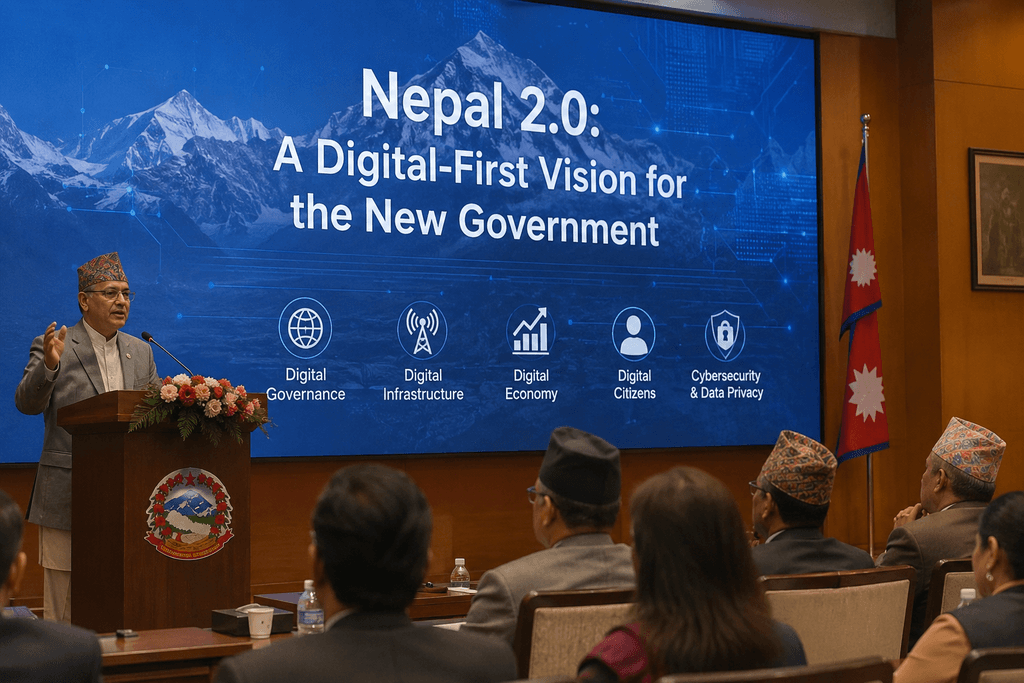
Get more knowledge here: Nepal 2.0
The Long-Term Opportunity
Nepal could move from:
Digital Payments → Open Financial Infrastructure → Fintech Innovation
That transition could create opportunities for both domestic startups and international technology companies.
5. Digital Nomad Visa & Tech Hubs
Nepal has an opportunity to attract people who earn internationally while living and working locally.
Remote workers can contribute to:
- Accommodation
- Restaurants
- Transportation
- Co-working spaces
- Tourism
- Professional services
- Local technology ecosystems
Nepal's recent policy discussions have also included measures related to remote work and attracting digital professionals, making this an area worth developing further. Any specific visa proposal should be clearly distinguished from rules that have already been formally implemented.
Proposed Reform
| Category | Details |
|---|---|
| Problem | Limited dedicated mechanisms to attract international remote professionals |
| Reform | Digital nomad visa + technology hubs |
| Why it Matters | Brings foreign income, knowledge and networks |
| How | Appropriate visa rules, tax clarity and co-working ecosystems |
| When | ⏱ Short Term (1–3 years) |
From Tourist Destination to Digital Destination
Nepal already has a globally recognized tourism identity.
The next opportunity could be:
Visit Nepal → Work from Nepal → Build in Nepal
Technology hubs in Kathmandu, Pokhara, Biratnagar, Butwal and other emerging cities could support this transition.
6. Digital Governance (E-Government 2.0)
Government digitization should move beyond putting individual forms online.
The real objective should be interoperable digital government.
Nepal's National Identity system provides an important foundation for digital identification and authentication, while the Nagarik App and other government platforms demonstrate the direction of digital public services.
Get more knowledge of NID in Nepal here: Department of National ID and Civil Registration
Proposed Reform
| Category | Details |
|---|---|
| Problem | Fragmented and paper-heavy government systems |
| Reform | Unified digital identity + citizen service infrastructure |
| Why it Matters | Faster, more transparent public services |
| How | Interoperable systems, APIs and digital authentication |
| When | ⏱ Medium Term (2–4 years) |
The Digital Government Stack
A mature digital-government ecosystem could look like:
Digital ID
↓
Citizen Authentication
↓
Government Service Portal
↓
Interoperable Government Systems
↓
Payments & Digital Documents
↓
Data Exchange
↓
Analytics & AI
Instead of asking citizens to repeatedly submit the same information to different government agencies, authorized systems could securely exchange verified information.
The Goal
A citizen should be able to complete a government service digitally without knowing which ministry operates the underlying system.
Get more knowledge here: Digital Governance in Nepal
7. Cybersecurity Law Modernization
Digital transformation increases both opportunity and cyber risk.
As more government, financial, healthcare, business, and citizen services move online, cybersecurity becomes part of national economic infrastructure.
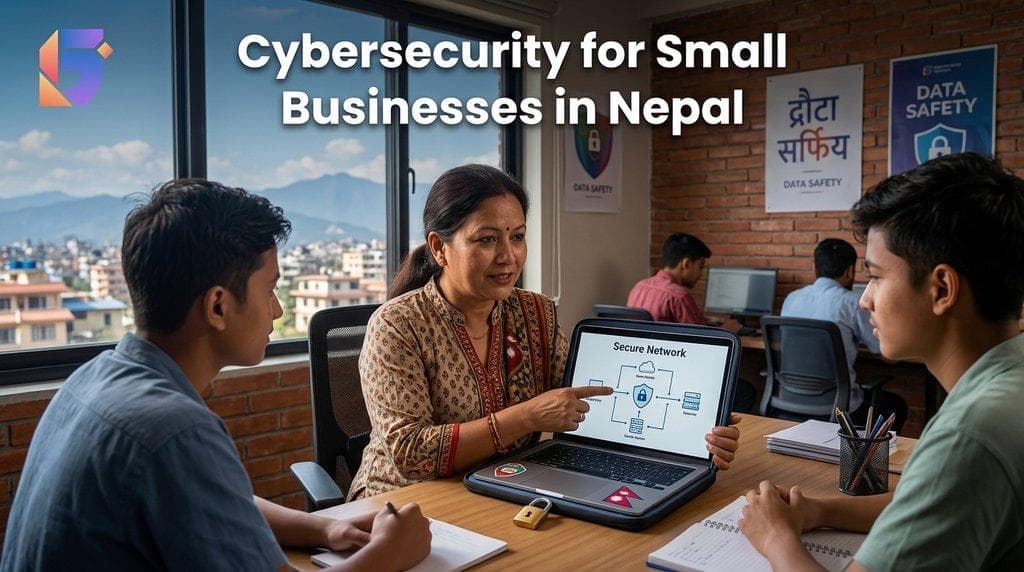
Nepal's cyber-law framework should continue evolving alongside cloud computing, AI, ransomware, digital fraud, critical infrastructure threats, and cross-border cybercrime.
| Category | Details |
|---|---|
| Problem | Existing cyber framework needs modernization for emerging threats |
| Reform | Modern cybersecurity legislation and institutional framework |
| Why it Matters | Protects critical infrastructure and digital services |
| How | Incident reporting, stronger security standards and coordinated response |
| When | ⏱ Immediate (0–2 years) |
Key Areas
A modern cybersecurity framework should address:
- Critical infrastructure protection
- Data breach reporting
- Cyber incident response
- Ransomware
- Digital fraud
- Cloud security
- Government system security
- Supply-chain security
- Cybersecurity standards
- International cooperation
8. Privacy & Cyber Monitoring Balance
Security cannot become an excuse for unlimited surveillance.
At the same time, privacy cannot prevent legitimate investigation of serious cybercrime.
Nepal therefore needs a clear framework defining how digital monitoring should operate within constitutional and legal safeguards.
| Category | Details |
|---|---|
| Problem | Risk of unchecked digital surveillance |
| Reform | Stronger digital-rights and oversight mechanisms |
| Why it Matters | Protects civil liberties while enabling legitimate security operations |
| How | Judicial oversight, transparency requirements and accountability |
| When | ⏱ Short Term (1–2 years) |
The Principle
A healthy digital society requires:
Security + Privacy + Accountability
rather than:
Security at the expense of Privacy
Potential safeguards could include:
- Judicial authorization where appropriate
- Clear legal thresholds
- Independent oversight
- Transparency reporting
- Data retention limits
- Citizen complaint mechanisms
This is particularly important as AI-powered surveillance and automated decision-making become more capable.
9. AI & Digital Skills Mission
Technology policy cannot succeed without people who can build and operate the technology.
Nepal has a growing technology workforce, but the country needs to move beyond basic digital literacy toward advanced technical capability.
Proposed Reform
| Category | Details |
|---|---|
| Problem | Advanced skill gaps and talent migration |
| Reform | National AI and digital-skills mission |
| Why it Matters | Creates a future-ready workforce |
| How | Curriculum reform, research funding and industry partnerships |
| When | ⏱ Start within 1 year (Ongoing) |
Priority Skills
Nepal should prioritize:
- Artificial Intelligence
- Machine Learning
- Data Science
- Cybersecurity
- Cloud Computing
- Software Engineering
- Semiconductor/electronics skills
- Robotics
- Blockchain
- UI/UX
- Product management
- Digital entrepreneurship
10. Tech Investment & FDI Reform
A globally competitive technology economy needs capital.
Startups require funding to:
- Build products
- Hire talent
- Enter international markets
- Conduct research
- Scale infrastructure
- Compete globally
Nepal therefore needs an investment environment that makes it easier for legitimate technology businesses and investors to operate.
| Category | Details |
|---|---|
| Problem | Complex investment and business processes |
| Reform | Startup-friendly legal and investment framework |
| Why it Matters | Attracts domestic and international capital |
| How | Simplified registration, clearer rules and investment mechanisms |
| When | ⏱ Medium Term (2–3 years) |
Priority Reforms
- Potential reforms include:
- Faster startup registration
- Digital company incorporation
- Simplified foreign investment processes
- Clearer startup investment rules
- Easier access to venture capital
- Better intellectual-property protection
- Technology-sector investment incentives
- Clearer exit mechanisms for investors
The Real Problem Isn’t Ideas , It’s Execution
Nepal does not lack technology ideas.
It does not lack young developers.
It does not lack entrepreneurs.
It does not lack digital adoption.
The bigger problem is often execution.
Three structural issues stand out:
➜ Weak implementation
➜ Poor inter-ministerial coordination
➜ Reliance on outdated or fragmented regulatory frameworks
A policy document alone cannot create a technology economy.
The real test is whether the policy can become:
Law → Institution → Infrastructure → Implementation → Measurable Results
From Policy Documents to Measurable Outcomes
Every major technology policy should have measurable indicators.
| Policy Area | Possible KPI |
|---|---|
| Digital government | % of major services available end-to-end online |
| Digital identity | % of eligible citizens digitally authenticated |
| Payments | Volume/value of digital transactions |
| AI | Number of AI startups/research projects |
| Cybersecurity | Average incident response time |
| Startups | New technology companies created |
| FDI | New technology companies created |
| Digital exports | Growth in IT-enabled service exports |
| Skills | Number of advanced-tech professionals trained |
| Data protection | Organizations meeting compliance requirements |
This shifts the conversation from:
“We launched a digital initiative.”
to:
“What measurable improvement did the initiative create?”
Strategic Insight
If Nepal Fixes Just 3 Things
If Nepal had to prioritize only three reforms initially, the strongest candidates would be:
➜ International Payments: Make it easier for legitimate digital businesses and professionals to participate in global commerce.
➜ Data Protection: Create a trustworthy environment for citizens, startups and international technology companies.
➜ Digital Governance: Build interoperable government systems rather than isolated digital platforms.
If these three areas are addressed effectively, Nepal could move faster toward becoming:
✔ A South Asian remote-work hub
✔ A global freelancing and digital-services destination
✔ A fintech and AI startup base
What Nepal's Digital Economy Could Look Like by 2030 ?
The objective should not simply be to have more websites and mobile applications.
A genuinely competitive digital Nepal could have:
| Area | 2030 Vision |
|---|---|
| Government | Digital-by-default public services |
| Identity | Interoperable digital identity |
| Finance | Open and innovative financial infrastructure |
| AI | Responsible AI adoption across sectors |
| Startups | Strong domestic startup ecosystem |
| Education | Industry-aligned technology education |
| Workforce | Globally competitive digital talent |
| Exports | Growing IT and digital-service exports |
| Cybersecurity | Strong national cyber resilience |
| Data | Trusted data governance |
| Investment | Startup-friendly investment environment |
| Remote work | International remote professionals working from Nepal |
The key is integration.
The Digital Nepal Policy Flywheel
A successful technology ecosystem can reinforce itself:
Better Policy
↓
More Investment
↓
More Startups
↓
More Jobs
↓
More Digital Exports
↓
More Tax Revenue
↓
Better Digital Infrastructure
↓
More Innovation
↓
Better Policy Outcomes
This is how technology policy can become an economic growth strategy, rather than simply an IT-sector strategy.
Nepal's Biggest Digital-Economy Opportunities
The reforms above could unlock opportunities across several sectors.
1. Global Digital Services
Nepal can export:
- Software development
- Digital marketing
- Graphic design
- Animation
- AI services
- Business-process outsourcing
- Consulting
- Software-as-a-Service
2. Fintech
Open financial infrastructure could support:
- Digital lending
- Payment innovation
- Financial inclusion
- Insurtech
- Regtech
- Personal finance platforms
3. AI
AI opportunities exist across:
- Healthcare
- Agriculture
- Tourism
- Education
- Government
- Banking
- Manufacturing
- Customer service
4. Digital Government
Government can become one of the largest users and developers of digital infrastructure.
Potential applications include:
- Digital identity
- Digital documents
- E-taxation
- E-procurement
- Digital land records
- Online licensing
- AI-assisted public services
- Open government data
5. Digital Tourism
Nepal's tourism industry can increasingly combine:
Tourism + Technology + Remote Work
This creates a potentially powerful economic model.
Policy Reform Priority Matrix
Not every reform needs to happen simultaneously.
| Reform | Urgency | Potential Economic Impact | Complexity |
|---|---|---|---|
| International payments | 🔴 High | 🔴 High | 🟡 Medium |
| Data protection | 🔴 High | 🔴 High | 🟡 Medium |
| Cybersecurity modernization | 🔴 High | 🔴 High | 🔴 High |
| Digital governance | 🔴 High | 🔴 High | 🔴 High |
| AI regulations | 🟡 Medium | 🔴 High | 🔴 High |
| Fintech sandbox/open banking | 🟡 Medium | 🔴 High | 🔴 High |
| Digital skills mission | 🔴 High | 🔴 High | 🟡 Medium |
| FDI reform | 🟡 Medium | 🔴 High | 🟡 Medium |
| Digital nomad ecosystem | 🟡 Medium | 🟡 Medium | 🟡 Medium |
| Digital rights oversight | 🟡 Medium | 🟡 Medium | 🔴 High |
This prioritization can help policymakers focus on reforms that can produce the greatest structural impact.
What Government Should Measure
A digital strategy should have a public dashboard.
Citizens should be able to see:
- How many government services are fully online
- How many people use digital government services
- Digital-payment adoption
- IT export growth
- Startup formation
- Technology-sector FDI
- AI investment
- Cybersecurity incidents
- Digital-skills training
- Government-system interoperability
The Principle
What gets measured gets managed.
Nepal should therefore treat digital transformation as a measurable national performance program.
Frequently Asked Questions
Q. What are the most important digital policy reforms Nepal needs?
The most important reforms include data protection, international payment access, AI governance, fintech innovation, digital government, cybersecurity modernization, digital skills development, and startup/FDI reform.
Q. Why is data protection important for Nepal?
Strong data protection can increase trust among citizens, businesses and international companies that process personal information. It is particularly important as AI, fintech, healthcare technology and cloud services expand.
Q. Why are international payments important for Nepal's digital economy?
Digital businesses and professionals need reliable ways to receive international payments. Better cross-border payment infrastructure can support software exports, freelancing, SaaS businesses, consulting and other digital services.
Q. How can Nepal become a global freelancing hub?
Nepal would need a combination of reliable internet, international payment infrastructure, advanced digital skills, tax clarity, business-friendly regulation, global marketing and access to international clients.
Q. Does Nepal need an AI law?
A dedicated AI framework could provide clearer rules for high-risk AI applications, transparency, accountability, safety and responsible innovation. It should complement broader national AI policy rather than unnecessarily restricting low-risk experimentation.
Q. What is open banking?
Open banking generally refers to systems that allow authorized third-party financial services to securely access or interact with banking data and services through standardized APIs, subject to user consent and regulatory safeguards.
Q. How can digital governance improve Nepal?
Interoperable digital government can reduce paperwork, duplicate data collection and unnecessary physical visits while making public services faster and easier to access.
Q. What is digital identity?
Digital identity allows an individual to be digitally identified or authenticated when accessing services. Nepal's National Identity ecosystem is an important part of the country's digital-government infrastructure.
Q. Can AI create jobs in Nepal?
AI is likely to change the nature of many jobs while creating demand for new technical and non-technical skills. Nepal can benefit by developing AI engineering, data, cybersecurity, product, research and AI-enabled business capabilities.
Q. How can Nepal attract technology FDI?
Nepal can become more attractive to investors through clearer regulations, faster business processes, predictable policies, investment protection, stronger infrastructure, skilled talent and easier access to international markets.
Q. Why is cybersecurity important for Nepal's digital economy?
As financial, government and business services become increasingly digital, cyber incidents can create economic and social disruption. Strong cybersecurity is therefore essential to digital trust.
Q. What role can universities play in Nepal's digital economy?
Universities can provide technical talent, research, entrepreneurship programs and industry collaboration. Stronger connections between universities and technology companies can help reduce the skills gap.
Q. Can Nepal become a South Asian technology hub?
Yes, but achieving this would require coordinated improvements in digital infrastructure, regulation, talent, investment, international payments, cybersecurity and digital governance.
Q. What are Nepal's biggest technology opportunities?
Major opportunities include IT services, software exports, AI, fintech, digital government, cybersecurity, remote work, SaaS, digital tourism and technology-enabled entrepreneurship.
Q. What should Nepal prioritize first?
A practical first phase could prioritize:
- International digital payments
- Data protection
- Digital government interoperability
- Cybersecurity
- Advanced digital skills
These reforms can create the foundation for longer-term AI, fintech and technology-investment growth.
The Path Forward
Nepal's challenge is not vision.
It is execution.
To succeed, Nepal needs to:
✔ Align ministries under a unified digital strategy
✔ Build institutional capacity
✔ Create measurable digital-government targets
✔ Modernize outdated regulations
✔ Encourage private-sector innovation
✔ Invest in advanced digital skills
✔ Strengthen cybersecurity
✔ Create predictable investment policies
✔ Improve international digital-payment infrastructure
✔ Ensure policy continuity across governments
Technology policy should not change completely every time political leadership changes.
The strongest digital economies are built through long-term institutional continuity.
Conclusion
Nepal has the opportunity to redefine its economic future.
The country already possesses many of the ingredients required for a competitive digital economy: a young workforce, growing connectivity, increasing digital adoption, entrepreneurial potential and a global demand for technology services.
But potential alone is not enough.
Nepal needs policies that make it easier to build, invest, innovate, export and participate in the global digital economy.
The next decade will be shaped by countries that can combine:
Technology + Talent + Capital + Policy + Execution
For Nepal, the opportunity is significant.
The country can become more than a consumer of digital technology.
It can become a producer, exporter and innovator in the global digital economy.
The next decade will belong to nations that act decisively.
For Nepal, that moment is now.