Transforming Fertility Care with ERP & EMR: The Future of Digital Fertility Clinics
Fertility treatment is one of the most sensitive and data-intensive areas of modern healthcare. From initial consultations and hormonal assessments to IVF cycle management and embryology tracking, fertility clinics handle complex workflows involving patients, doctors, nurses, embryologists, laboratories, pharmacies, billing teams, and administrators.
When these processes rely on disconnected software, spreadsheets, paper records, and manual communication, clinics can experience workflow bottlenecks, duplicated data, documentation errors, delays, and inconsistent patient experiences.
This is where ERP and EMR integration can transform fertility care.
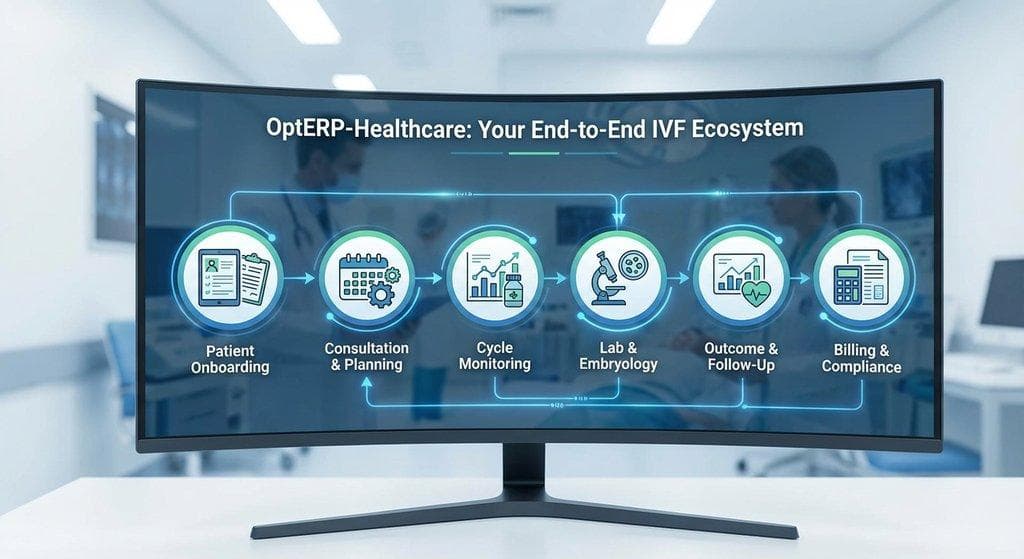
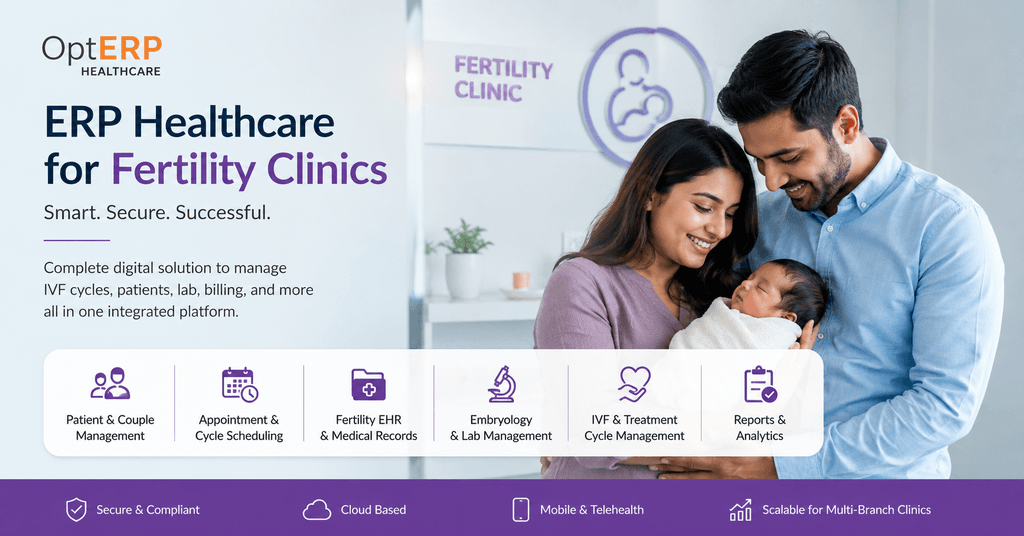
OptERP – Fertility & IVF Solution brings clinical, operational, financial, laboratory, and patient-engagement processes together within an integrated digital platform. By connecting these functions, fertility clinics can create a more coordinated, data-driven, and patient-centric environment.
Why Fertility Clinics Need a Specialized ERP System ?
Fertility clinics operate differently from many general healthcare facilities. Treatment can involve multiple appointments, repeated diagnostic tests, medication schedules, laboratory procedures, treatment cycles, embryology workflows, financial packages, and long-term follow-ups.
The World Health Organization estimates that approximately 1 in 6 people of reproductive age experience infertility during their lifetime, highlighting the scale of demand for accessible and effective fertility care worldwide.
At the same time, fertility care can be expensive and difficult to access, particularly in low- and middle-income countries. WHO identifies cost, infrastructure, trained personnel, and availability of services as important barriers to fertility treatment.
For fertility clinics, this makes efficient management of clinical and operational resources increasingly important.
Common Complexities in Fertility Care
| Fertility Clinic Workflow | Why It Requires Specialized Management |
|---|---|
| Multiple treatment cycles | Patients may undergo repeated IVF, IUI, or ICSI cycles requiring historical tracking. |
| Long-term follow-ups | Patient information needs to remain accessible throughout the treatment journey. |
| Embryology management | Gamete and embryo information requires careful tracking and documentation. |
| Donor & surrogacy programs | Additional screening, documentation, matching, consent, and confidentiality requirements may apply. |
| Hormonal & diagnostic monitoring | Multiple laboratory and imaging results need to be connected to the patient's clinical record. |
| Legal & consent documentation | Fertility treatment can involve treatment-specific consent and documentation requirements. |
| Medication management | Fertility treatment frequently involves carefully scheduled medications and dosage changes. |
| Financial management | IVF packages, installments, procedures, medications, and laboratory services may need coordinated billing. |
A specialized fertility ERP system can connect these workflows rather than forcing different departments to operate in isolated systems.
Fertility Care by the Numbers
The increasing demand for fertility care makes digital infrastructure increasingly relevant.
| Indicator | Data |
|---|---|
| People affected by infertility during their lifetime | Approximately 1 in 6 |
| Estimated global lifetime infertility prevalence | 17.5% |
| Estimated 12-month infertility prevalence | 12.6% |
| ART cycles reported worldwide annually | More than 3 million |
| European ART cycles reported in 2020 | 923,318 |
| European countries contributing to the 2020 data | 41 countries |
WHO's prevalence estimates are based on studies covering 1990–2021, while the ART cycle figures are reported by ESHRE and relate to assisted reproductive technology activity.
These figures should not be interpreted as evidence that software itself increases fertility or IVF success rates. Rather, they demonstrate the scale and complexity of fertility care and the importance of reliable clinical and operational data.
Traditional Fertility Clinic Workflow vs. Integrated Digital Workflow
| Traditional Approach | Integrated ERP & EMR Approach |
|---|---|
| Paper-based patient records | Centralized electronic patient records |
| Separate spreadsheets | Integrated operational database |
| Manual appointment coordination | Digital scheduling |
| Separate laboratory records | Connected laboratory and diagnostic information |
| Manual medication tracking | Pharmacy and medication management |
| Separate billing systems | Integrated billing and financial management |
| Manual patient communication | Automated SMS, email, and digital communication |
| Difficult historical reporting | Centralized analytics and dashboards |
| Fragmented departmental information | Connected clinical and administrative workflows |
The objective is not simply to replace paper with software. The larger opportunity is to connect the entire fertility treatment journey.
Key Features of OptERP – Fertility & IVF Solution
1. Patient & Couple Management
Fertility treatment frequently involves information relating to both individual patients and couples. Centralizing this information helps clinical and administrative teams access the relevant history throughout the treatment journey.
OptERP can support:
✔ Centralized patient and couple profiles
✔ Fertility history and cycle tracking
✔ Infertility diagnosis information
✔ Consent and legal documentation
✔ Patient portal
✔ Treatment history
✔ Clinical notes and supporting documents
Built on OptERP EHR, this provides a foundation for connecting patient information with broader fertility clinic operations.
2. Appointment & Cycle Scheduling
Fertility treatment involves multiple appointments and time-sensitive activities.
OptERP can support:
✔ Doctor scheduling
✔ IVF cycle calendar
✔ SMS/email reminders
✔ Resource scheduling
✔ OT, laboratory, and specialist scheduling
✔ Follow-up tracking
✔ Appointment history
Example Fertility Scheduling Workflow
| Stage | Activity | Digital Management |
|---|---|---|
| 1 | Initial consultation | Patient registration & appointment |
| 2 | Diagnostic assessment | Tests and reports |
| 3 | Treatment planning | Doctor notes and protocol |
| 4 | Medication/stimulation | Medication and cycle tracking |
| 5 | Monitoring | Hormonal and ultrasound results |
| 6 | Egg retrieval | Procedure scheduling |
| 7 | Fertilization/embryology | Laboratory tracking |
| 8 | Embryo transfer | Procedure scheduling |
| 9 | Follow-up | Pregnancy testing and follow-up |
| 10 | Outcome | Cycle outcome documentation |
3. Fertility Electronic Medical Records (EHR)
A fertility EMR/EHR provides a structured digital record of fertility-related clinical information.
OptERP can support:
✔ Hormonal reports such as AMH, FSH, and LH
✔ Ultrasound and follicular monitoring
✔ IVF/IUI/ICSI protocols
✔ Medication and prescriptions
✔ Clinical notes
✔ Attachments and reports
✔ Treatment history
Why Fertility EHR Matters
Instead of searching through multiple systems for different pieces of information, authorized healthcare professionals can access relevant clinical information from a centralized record.
ERP vs. EMR in Fertility Clinics
ERP and EMR serve different purposes, but integrating them can provide broader operational visibility.
| Area | EMR | ERP | Integrated ERP + EMR |
|---|---|---|---|
| Patient clinical records | ✓ | — | ✓ |
| Doctor documentation | ✓ | — | ✓ |
| IVF cycle information | ✓ | — | ✓ |
| Laboratory information | ✓ | Sometimes | ✓ |
| Appointment management | ✓ | ✓ | ✓ |
| Pharmacy/inventory | Limited | ✓ | ✓ |
| Billing | Limited | ✓ | ✓ |
| Financial reporting | — | ✓ | ✓ |
| HR/administration | — | ✓ | ✓ |
| CRM/patient engagement | Limited | ✓ | ✓ |
| Business analytics | Limited | ✓ | ✓ |
An EMR primarily focuses on clinical and patient information, while an ERP connects broader organizational processes such as finance, inventory, operations, CRM, and administration.
For fertility clinics, integrating the two can help connect the clinical treatment journey with the operational and financial journey.
Why EMR Matters in Fertility Healthcare?
Electronic Medical Records (EMR) play a critical role in modern fertility healthcare because treatment involves large amounts of sensitive and time-dependent clinical information.
❖ Improved Clinical Accuracy
A centralized digital record can help clinicians access previous diagnoses, laboratory reports, treatment protocols, medications, and cycle information.
❖ Better Patient Coordination
Fertility treatment often involves doctors, nurses, embryologists, laboratory staff, and administrative teams. A connected EMR can make relevant information more accessible across authorized departments.
❖ Enhanced Patient Experience
Patients can benefit from easier access to appointments, reports, treatment information, reminders, and communication.
❖ Reduced Operational Errors
Digital workflows can reduce reliance on manual data entry, duplicated records, and disconnected documentation.
❖ Data Security & Compliance
Role-based access, audit logs, access controls, and structured documentation can support responsible management of sensitive fertility information. Specific privacy and regulatory requirements depend on the jurisdiction and healthcare organization.
❖ Better Decision-Making
Structured clinical and operational data can help authorized professionals and administrators identify trends and make informed decisions.
EMR is therefore an important component of safe, efficient, and patient-centric fertility care.
4. IVF & Treatment Cycle Management
IVF treatment involves multiple interconnected stages. A digital IVF management system can help clinics organize these activities within a structured treatment cycle.
OptERP can support:
✔ Ovarian stimulation
✔ Egg retrieval
✔ Fertilization
✔ Embryo transfer scheduling
✔ Cycle outcome tracking
✔ Pregnancy analytics
IVF Treatment Cycle Data Flow
| IVF Stage | Information That Can Be Managed |
|---|---|
| Ovarian stimulation | Medication, dosage, monitoring |
| Follicular monitoring | Ultrasound and clinical observations |
| Egg retrieval | Procedure scheduling and documentation |
| Fertilization | Laboratory information |
| Embryo development | Embryology records |
| Embryo transfer | Procedure scheduling |
| Pregnancy testing | Follow-up information |
| Cycle outcome | Treatment outcome and analytics |
A structured digital workflow can help staff maintain continuity between clinical, laboratory, and administrative activities.
5. Embryology & Lab Management
Embryology is one of the most data-sensitive areas of fertility care.
OptERP can support:
✔ Gamete tracking
✔ Embryo grading/development logs
✔ Cryopreservation
✔ Lab automation
✔ Chain-of-custody documentation
Digital Embryology Workflow
| Step | Process | Digital Record |
|---|---|---|
| 1 | Sample collection | Patient/sample information |
| 2 | Laboratory processing | Processing details |
| 3 | Fertilization | Fertilization records |
| 4 | Embryo development | Development and grading records |
| 5 | Cryopreservation | Storage information |
| 6 | Embryo transfer | Transfer documentation |
| 7 | Outcome | Cycle outcome |
Because laboratory records can be highly sensitive, access controls and accurate identification are particularly important.
6. Donor & Surrogacy Management
Fertility clinics managing donor or surrogacy programs may need additional workflows and documentation.
OptERP can support:
✔ Donor database
✔ Screening/eligibility information
✔ Matching workflows
✔ Surrogacy agreements/workflows
✔ Compliance and confidentiality processes
These workflows should always operate according to applicable laws, regulations, ethical requirements, and clinic policies.
7. Pharmacy & Medication Management
Medication plays an important role in many fertility treatment protocols.
OptERP can support:
✔ Fertility drug inventory
✔ Prescriptions
✔ Cycle dosage information
✔ Stock alerts
✔ Medication tracking
✔ Inventory management
Fertility Pharmacy Management
| Requirement | Digital Capability |
|---|---|
| Drug inventory | Centralized inventory |
| Prescription | Digital prescription records |
| Stock monitoring | Inventory visibility |
| Low-stock management | Alerts |
| Medication history | Patient-linked records |
| Cycle medication | Treatment-cycle association |
This can help clinics coordinate medication-related information with treatment and inventory workflows.
8. Billing, Packages & Insurance
Fertility treatment can involve multiple procedures, laboratory services, consultations, medications, and packages.
OptERP can support:
✔ IVF packages
✔ Installments
✔ Payments
✔ Insurance
✔ Cost estimation/counseling
✔ Revenue analysis
Fertility Clinic Financial Management
| Financial Area | Example |
|---|---|
| Treatment packages | IVF/IUI/ICSI packages |
| Procedures | Retrieval and transfer procedures |
| Laboratory | Diagnostic and embryology services |
| Pharmacy | Fertility medication |
| Installments | Treatment payment schedules |
| Insurance | Applicable insurance processing |
| Revenue | Clinic-level revenue reporting |
| Cost estimation | Patient financial counseling |
An integrated system can connect financial information with treatment workflows while keeping access appropriately controlled.
9. Laboratory & Diagnostics Integration
Fertility treatment depends heavily on laboratory and diagnostic information.
OptERP can support integration with:
✔ Hormone laboratories
✔ Semen analysis
✔ Ultrasound
✔ Automated report linking
✔ Diagnostic records
The goal is to reduce unnecessary manual transfer of information and make relevant reports available within the patient's digital record.
10. Reporting & Analytics
Data becomes increasingly valuable when it can be transformed into meaningful reports and dashboards.
OptERP can support:
✔ IVF success rate analytics
✔ Doctor performance
✔ Patient conversion funnel
✔ Operational dashboards
✔ Financial reporting
Key Fertility Clinic Metrics
| Metric | What It Can Help Monitor |
|---|---|
| Number of treatment cycles | Clinic treatment volume |
| IVF cycle outcomes | Treatment outcome patterns |
| Patient conversion rate | Inquiry-to-treatment journey |
| Appointment utilization | Scheduling efficiency |
| Doctor workload | Resource utilization |
| Laboratory workload | Lab capacity |
| Medication utilization | Pharmacy planning |
| Revenue by service | Financial performance |
| Patient follow-up rate | Continuity of care |
| Branch performance | Multi-location comparison |
Important: analytics should be used to understand patterns and support clinical or operational decision-making. IVF outcomes are influenced by many medical and patient-specific factors, so software analytics should not be interpreted as a guarantee of treatment success.
Data-Driven Fertility Care
The importance of standardized fertility data is increasingly recognized internationally.
For example, ESHRE's EuMAR initiative focuses on prospective, cycle-by-cycle data collection for medically assisted reproduction, with goals including transparency, quality assurance, standardized parameters, comparability, and understanding cumulative outcomes.
This highlights an important principle for modern fertility clinics:
Better structured data can support better visibility into fertility-care workflows.
A fertility ERP and EMR system can help clinics organize this information across clinical, laboratory, operational, and financial processes.
11. CRM & Patient Engagement
Fertility treatment is not only a clinical journey; it is also a long-term patient relationship.
OptERP can support:
✔ Inquiry lead management
✔ Awareness campaigns
✔ WhatsApp/SMS/email communication
✔ Feedback
✔ Patient satisfaction tracking
✔ Follow-up communication
Patient Journey With an Integrated Fertility Platform
| Patient Journey | Digital Support |
|---|---|
| Inquiry | CRM lead management |
| Consultation | Appointment scheduling |
| Diagnosis | EMR and diagnostic records |
| Treatment planning | Clinical documentation |
| IVF cycle | Cycle management |
| Laboratory | Embryology/lab records |
| Billing | Package and payment management |
| Follow-up | Automated reminders |
| Outcome | Outcome documentation |
| Future treatment | Historical patient data |
This creates a more connected patient journey from the first inquiry through treatment and follow-up.
12. Compliance & Data Security
Fertility clinics manage highly sensitive patient, reproductive, medical, laboratory, and financial information.
OptERP can support:
✔ Consent management
✔ Audit logs
✔ Role-based access
✔ Privacy controls
✔ Structured documentation
✔ Secure access to patient information
Actual compliance requirements vary according to the country, applicable healthcare regulations, organizational policies, and the specific information being processed. Therefore, clinics should configure their systems according to the applicable legal and regulatory framework.
13. Mobile & Telehealth Integration
Digital fertility care can extend beyond the physical clinic.
OptERP can support:
✔ Tele-IVF
✔ Patient mobile app
✔ Digital reports
✔ Appointment schedules
✔ Doctor dashboards
✔ Patient communication
Mobile and telehealth capabilities can be particularly useful for follow-ups and communication where clinically appropriate.
14. Customization & Scalability
Every fertility clinic has different workflows, departments, treatment protocols, reporting requirements, and operational structures.
OptERP provides:
✔ Modular architecture
✔ Multi-branch support
✔ Cloud deployment
✔ Flexible customization
✔ Scalable infrastructure
This allows fertility clinics to begin with the workflows they need and expand their digital ecosystem as their operations grow.
How ERP & EMR Integration Transforms Fertility Clinics
| Challenge | ERP + EMR Approach | Potential Benefit |
|---|---|---|
| Fragmented patient information | Centralized records | Better information accessibility |
| Manual appointment | Digital scheduling | Better coordination |
| Disconnected laboratory data | Integrated reports | Faster information access |
| Complex IVF cycles | Cycle management | Structured treatment tracking |
| Manual inventory | Pharmacy/inventory management | Better stock visibility |
| Separate billing | Integrated financial management | Better financial tracking |
| Patient communication gaps | CRM and notifications | Improved engagement |
| Limited management visibility | Dashboards and analytics | Data-driven decisions |
| Multiple branches | Centralized platform | Greater operational visibility |
| Paper-heavy processes | Digital documentation | Improved workflow efficiency |
Key Benefits of a Digital Fertility Clinic
A connected fertility ERP and EMR system can help clinics work toward:
✔ Better Clinical Coordination
Relevant patient and treatment information can be accessible to authorized healthcare professionals.
✔ More Efficient Operations
Scheduling, inventory, billing, CRM, laboratory, and administrative processes can be connected.
✔ Improved Patient Engagement
Patients can receive reminders, reports, schedules, and communication through digital channels.
✔ Better Data Visibility
Management can use dashboards and reports to understand operational and financial trends.
✔ Reduced Administrative Work
Automation can reduce repetitive manual processes.
✔ Scalable Growth
A modular platform can support clinics as they add services, departments, or branches.
The Future of Fertility Care is Digital
The future of fertility care is increasingly data-driven, patient-centric, and digitally connected.
As fertility clinics manage increasing volumes of clinical information, treatment cycles, laboratory data, financial transactions, and patient interactions, disconnected systems can make it difficult to maintain a consistent view of the entire patient journey.
A connected ERP and EMR ecosystem can bring these workflows together.
The future fertility clinic may therefore depend on digital systems that connect:
Patients → Doctors → EMR → IVF Cycles → Laboratory → Embryology → Pharmacy → Billing → CRM → Analytics
With OptERP – Fertility & IVF Solution, clinics can integrate clinical care, embryology, finance, CRM, diagnostics, patient engagement, and operational management within a unified digital environment.
The objective is not simply to digitize individual processes. It is to create a connected fertility care ecosystem where information can move efficiently between authorized teams, patients can receive better coordinated services, and clinic management can make decisions based on structured data.
Challenges to Consider When Digitizing Fertility Clinics
Digital transformation also requires careful planning.
| Challenge | Consideration |
|---|---|
| Data migration | Existing patient and historical records need structured migration |
| Staff adoption | Employees require training and workflow support |
| Data security | Sensitive fertility information requires strong access controls |
| System integration | Laboratory and diagnostic systems may require integration |
| Custom workflows | Clinics may require configuration for their specific processes |
| Regulatory requirements | The system must be aligned with applicable laws and regulations |
| Data quality | Accurate input is essential for reliable analytics |
| Infrastructure | Reliable connectivity and technical support are important |
| Scalability | The platform should accommodate future growth |
Successful implementation therefore requires more than installing software. It involves workflow design, staff training, data governance, integration, security, and continuous improvement.
Frequently Asked Questions About Fertility ERP & EMR
Q. What is fertility clinic ERP software?
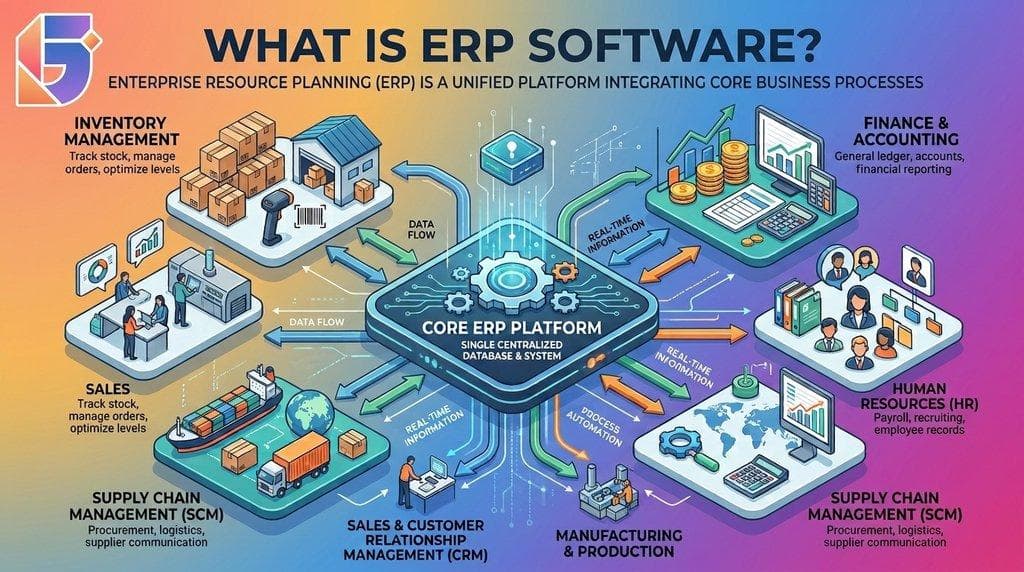
Fertility clinic ERP software is a specialized enterprise management system designed to connect clinical, operational, financial, laboratory, pharmacy, CRM, and administrative workflows within a fertility clinic.
Q. What is fertility EMR?
A fertility EMR is an electronic medical record system designed to manage patient-specific clinical information such as fertility history, diagnoses, laboratory results, treatment protocols, medications, IVF cycles, and clinical notes.
Q. What is IVF management software?
IVF management software helps fertility clinics organize IVF treatment workflows, including appointments, stimulation, monitoring, egg retrieval, embryology, embryo transfer, treatment outcomes, and follow-ups.
Q. What is the difference between ERP and EMR in fertility clinics?
An EMR primarily manages clinical and patient information, while an ERP manages broader business and operational functions such as billing, inventory, finance, CRM, administration, and resource management. An integrated solution connects both areas.
Q. Why do fertility clinics need specialized ERP software?
Fertility clinics manage complex workflows involving treatment cycles, laboratory procedures, medications, appointments, patient records, embryology, billing, and follow-ups. Specialized ERP software can connect these workflows in a single system.
Q. How can ERP help manage IVF treatment cycles?
A fertility ERP can help organize IVF cycle schedules, treatment protocols, monitoring information, procedures, laboratory workflows, embryo transfer scheduling, follow-ups, and cycle outcomes.
Q. Can fertility ERP software manage embryology laboratories?
A fertility ERP can support embryology workflows such as gamete tracking, embryo development records, grading, cryopreservation, laboratory documentation, and chain-of-custody processes, depending on the system's capabilities and configuration.
Q. Can fertility ERP integrate laboratory and diagnostic reports?
Yes. Fertility ERP systems can be designed to connect laboratory and diagnostic information, allowing relevant reports such as hormonal tests, semen analysis, and ultrasound results to be associated with patient records.
Q. Can fertility ERP manage donor and surrogacy workflows?
A specialized fertility ERP can support donor databases, screening information, matching workflows, documentation, and related processes. Such functionality must be configured according to applicable laws, regulations, and clinic policies.
Q. Can fertility ERP manage fertility medications?
Yes. Fertility ERP software can support pharmacy inventory, prescriptions, medication records, stock monitoring, alerts, and treatment-cycle medication information.
Q. Can fertility ERP manage IVF packages and billing?
Yes. Fertility ERP systems can support IVF packages, installments, payments, insurance-related workflows, cost estimates, and financial reporting.
Q. Is cloud-based fertility ERP suitable for fertility clinics?
Cloud-based systems can provide centralized access, scalability, and easier multi-location management. However, clinics should evaluate security, availability, data governance, regulatory requirements, integration capabilities, and vendor support before implementation.
Q. Can fertility ERP support multiple fertility clinic branches?
Yes. A scalable fertility ERP can support multi-branch operations, centralized reporting, branch-level performance monitoring, and shared operational workflows depending on its architecture and configuration.
Q. Can fertility ERP improve the patient experience?
It can support a better patient experience by connecting appointments, reminders, digital reports, communication, follow-ups, billing information, and other patient-facing workflows.
Q. Can fertility ERP improve IVF success rates?
ERP software should not be presented as a direct guarantee of improved IVF success rates. Its primary role is to improve information management, workflow coordination, documentation, analytics, and operational efficiency. Clinical outcomes depend on many medical and patient-specific factors.
Q. What should a fertility clinic consider when choosing ERP and EMR software?
Important considerations include:
⦁ Fertility-specific workflows
⦁ IVF cycle management
⦁ Embryology management
⦁ Fertility EHR/EMR capabilities
⦁ Laboratory integration
⦁ Pharmacy management
⦁ Billing and financial management
⦁ CRM and patient engagement
⦁ Data security
⦁ Role-based access
⦁ Reporting and analytics
⦁ Scalability
⦁ Multi-branch support
⦁ Customization
⦁ Technical support
⦁ Integration capabilities
Q. Why is data analytics important for fertility clinics?
Data analytics can help clinics understand treatment volumes, cycle outcomes, appointment utilization, patient conversion, resource usage, financial performance, and other operational indicators.
Q. Can small fertility clinics use fertility ERP software?
Yes. A modular and scalable fertility ERP can be configured according to the size and requirements of a clinic. Smaller clinics can start with essential workflows and expand functionality as their operations grow.
Q. What is the future of digital fertility clinics?
The future of fertility care is likely to involve greater integration between EMR, ERP, laboratory systems, embryology, patient portals, mobile applications, analytics, and telehealth. The objective is to create a more connected and data-driven fertility care ecosystem.
Conclusion
Fertility care is complex, sensitive, and highly dependent on accurate information. From patient management and fertility EHR to IVF cycle management, embryology, laboratory diagnostics, pharmacy, billing, CRM, and analytics, every stage generates information that needs to be managed effectively.
With infertility affecting approximately 1 in 6 people globally, the demand for accessible, organized, and high-quality fertility care remains significant.
A specialized Fertility ERP and EMR solution can help clinics connect these processes rather than managing them through fragmented systems.
OptERP – Fertility & IVF Solution brings together clinical care, embryology, finance, CRM, diagnostics, patient engagement, and operational management to support a connected digital fertility clinic.
The future of fertility care is not simply about having more software. It is about having the right information, in the right place, at the right time, for the right authorized person.